by Amir Iqbal
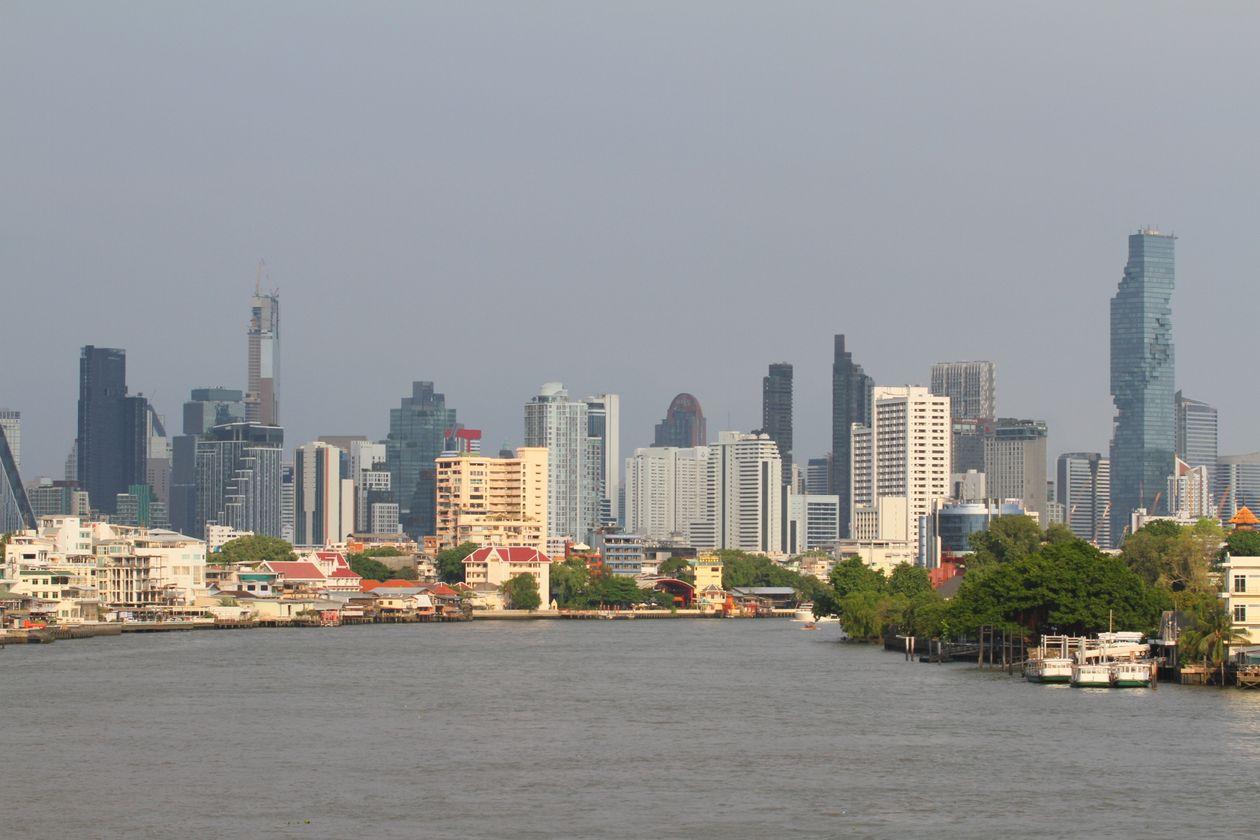
Property Taxes in Thailand for Foreign Buyers are lighter than in many popular property markets, but they are spread across four moments: when you buy, every year you own, when you rent the property out, and when you sell. This guide explains each tax in plain English, with the rates in force in late 2026. Confirm them with a Thai lawyer or tax adviser before you buy, because the rules change and their application depends on your situation.
Thailand is one of the most open property markets in Asia for foreign buyers. There is no stamp duty surcharge for foreigners and no foreign buyer tax, and the annual property tax on an ordinary condominium is often around one thousand baht a year. The traps are different from the ones in London or Sydney: a foreigner cannot own land, so most foreign buyers own a condominium unit; the five-year rule on selling decides whether you pay a 3.3% tax or a 0.5% tax; and rental income is taxed in Thailand even if you live abroad.
The tax picture at a glance
Property Taxes in Thailand for Foreign Buyers fall into four groups. When you buy, the Land Office charges a transfer fee of 2% of the official appraised value, and the seller settles specific business tax of 3.3% or stamp duty of 0.5%, and withholding tax on the gain. Every year you own, you pay the land and building tax, which for an ordinary foreign-owned condominium is 0.02% of the appraised value. If you rent the home out, the rent is taxed in Thailand, with 15% withheld from payments to a non-resident owner. When you sell, the same charges return, and whether you pay the 3.3% tax or the 0.5% duty depends on how long you have owned the property.
Two features surprise new buyers. Most charges are calculated on the government appraised value, not on the price you agreed, and that value is usually lower than the market price. And the contract decides who pays what. The common arrangement is that buyer and seller split the transfer fee equally, the seller pays the specific business tax or stamp duty and the withholding tax, and each side pays its own agent. Read your contract before you sign.
- Transfer fee: 2% of the appraised value, usually split between buyer and seller.
- Specific business tax: 3.3% on the higher of the appraised value or the sale price.
- Stamp duty: 0.5% on the higher of the appraised value or the sale price, only when specific business tax does not apply.
- Withholding tax: 1% for a company seller, a sliding calculation for an individual seller.
- Land and building tax: 0.02% a year on an ordinary foreign-owned condominium.
- Rental income tax: 15% withheld from rent paid to a non-resident owner.
What foreigners can own
Foreigners generally cannot own land in Thailand. The options are to own a condominium unit outright, or to lease land and a house. A condominium is the straightforward route, and it is what almost every foreign buyer chooses. Under the Condominium Act, foreigners together may own up to 49% of a building’s total saleable floor area. Before you buy, check the building still has foreign quota available, because the Land Office will not register a transfer to a foreigner if the quota is full.
To register a condominium in a foreigner’s name, the money must come from abroad, and the buyer must produce a Foreign Exchange Transaction form, the FET form, from a Thai bank. It is required when the amount is more than 50,000 US dollars. Keep the form safe, because you will need it again when you sell and take the money out of the country.
A house with land is different. A foreigner cannot own the land, so the usual structure is a registered lease of up to 30 years, with a registration fee of 1% of the total rent plus stamp duty of 0.1%. Be careful with promises of renewal: a lease that says it will be renewed for another 30 years is not an enforceable right, as the Thai Supreme Court has confirmed. If you want freehold ownership as a foreigner in Thailand, a condominium is the answer.
Buying costs and transfer taxes
Every sale in Thailand is completed at the Land Office, and up to four charges can arise on the day. The first is the transfer fee, 2% of the government appraised value, whatever price was agreed. By custom it is often split equally, but the contract decides, and some developers pass the whole fee to the buyer. Work out your share before you sign.
You may read about a 0.01% transfer fee. It is a temporary measure to 30 June 2027, only for Thai individual buyers on properties priced and appraised at up to 7 million baht. A foreign buyer pays the full 2%.
Specific business tax is 3.3% on the higher of the appraised value or the sale price. It applies to developers, companies, and anyone who built to sell, and to an individual who sells within five years of buying. Exemptions for individuals: a seller who inherited the property, and a seller whose name has been in the house registration book, the tabien baan, as principal residence for at least one year. A foreign seller who never registered in the tabien baan cannot use that exemption.
Stamp duty is 0.5% of the higher of the appraised value or the sale price, and applies only when specific business tax does not, typically when an individual sells after five years or more. The two are never paid together. The fourth charge is withholding tax, the seller’s income tax on the gain. For a company seller it is a flat 1% of the higher of the sale price or the appraised value. For an individual it is a sliding calculation based on the appraised value and the years held, at the progressive personal income tax rates. The withheld amount is a credit against the seller’s final income tax bill, not an extra tax.
A buyer should budget roughly 1% to 2% of the price in statutory costs, plus the sinking fund, legal fees and money-transfer costs. The heavier taxes at transfer fall on the seller by default, but the contract can move any of them. The Land Office quotes exact figures a day or two before registration, so ask your lawyer to get the quote in advance.
Annual land and building tax
Thailand has had an annual property tax since 1 January 2020. It is charged every year on land, buildings and condominiums, and the owner pays it. The tax is based on the government appraised value, usually different from what you paid. The local authority sends the bill in February, and payment is due by the end of April.
The rate actually applied for residential property starts at 0.02% of the appraised value. A condominium that is not the owner’s main home is taxed at 0.02% up to 50 million baht, rising in bands to 0.10% for the most expensive homes. A unit appraised at 5 million baht pays about 1,000 baht a year, and a typical foreign-owned condominium of 5 to 15 million baht pays roughly 1,000 to 3,000 baht.
The owner-occupied exemption is the part foreign buyers most often misunderstand. A principal residence is exempt on the first 50 million baht for land and a house, and the first 10 million baht for a condominium. But it only applies where the owner’s name is in the house registration book for that address. A foreign condominium owner is almost never on the tabien baan at the property, so the unit is taxed on its full appraised value from the first baht. That is still a small bill at 0.02%, but it is not zero, and the bill goes to the property address, so arrange for someone to watch for it each February.
Rental income tax
Rent from a Thai property is Thai-source income, taxable in Thailand whether or not the owner lives there. The amount depends on one count: the number of days you spend in Thailand in the calendar year.
A person who spends 180 days or more in Thailand in a calendar year is a Thai tax resident for that year. The days are cumulative, the test is applied afresh each year, and your visa has no bearing on it. A resident adds the rent to other income on an annual return and pays progressive rates of 0% to 35%. The first 150,000 baht of net income in a tax year is taxed at 0%, and the rates rise in bands above that. For rent from buildings, a resident may deduct a flat 30% of gross rent as expenses, with no receipts needed, or claim actual expenses instead.
If you are not a Thai tax resident, a payer in Thailand must withhold 15% of the rent. In practice a corporate tenant, hotel operator or rental manager deducts it and gives you a withholding certificate. The 15% is charged on the gross rent, before any expenses. If a private tenant pays without deducting, the income is still taxable and should be declared.
The 15% withholding is not a final tax. A non-resident owner may file a Thai personal income tax return, claim the 30% standard deduction, apply the progressive rates, and use the withheld 15% as a credit. Because the first 150,000 baht of net income is taxed at 0% and the lower bands are only 5% and 10%, many foreign owners pay less than 15% in total and can claim a refund, although it must be specifically requested on the return. To file you need a Thai tax identification number, from the Revenue Department. The return is filed for each calendar year by the end of March of the following year.
Selling and the five-year rule
Thailand has no separate capital gains tax. When an individual sells, the gain is taxed as personal income in two steps: withholding tax deducted at the Land Office on transfer day, then the annual return, where the gain is declared and the withheld amount is credited. For an individual, the withholding is calculated on the appraised value with a deduction that grows with the years held, then taxed at the progressive rates. The longer you held the property, the smaller the withholding. A company seller pays a flat 1% of the higher of the sale price or the appraised value.
The five-year rule decides which Land Office charge applies. If an individual sells within five years of buying, specific business tax of 3.3% applies on the higher of the appraised value or the sale price. After five years, stamp duty of 0.5% applies instead. The two are never charged together. On a 6 million baht sale, that is 198,000 baht against 30,000 baht, so holding for five years is the best way to cut the tax on a sale. Developers and companies pay specific business tax whatever the holding period. A seller who inherited the property, or whose name has been in the house registration book as principal residence for a year, does not pay it. The transfer fee of 2% of the appraised value is charged on a sale just as on a purchase. Before you sell, check the foreign quota, and keep your FET form: you will need it to take the sale money out of Thailand.
Worked example
Take a foreign buyer who buys a condominium in Bangkok for 5 million baht, where the appraised value is also 5 million baht. The transfer fee is 2% of the appraised value, or 100,000 baht, and if the contract splits it equally the buyer pays 50,000 baht. Each year the land and building tax is 0.02% of the appraised value, which is 1,000 baht a year.
Suppose the owner rents it out for 25,000 baht a month, or 300,000 baht a year. As a non-resident, 15% is withheld, which is 45,000 baht. On a Thai return, the 30% deduction reduces the taxable amount to 210,000 baht. The first 150,000 baht is taxed at 0%, and the remaining 60,000 baht at 5%, which is 3,000 baht. With 45,000 baht already withheld, 42,000 baht can be claimed back. If the owner sells after three years for 6 million baht, specific business tax is 3.3% of 6 million baht, which is 198,000 baht. Had the owner waited five years, stamp duty of 0.5% would have been 30,000 baht, a saving of 168,000 baht. These numbers are rounded, so treat them as an illustration, not a quote.
Frequently asked questions
Do foreign buyers pay more property tax than Thai buyers? No. The rates are the same for everyone. The only difference is the temporary transfer fee reduction to 0.01%, which applies only to Thai individual buyers on properties priced and appraised at up to 7 million baht.
Can a foreigner own land in Thailand? Generally no. A foreigner can own a condominium unit outright, within the 49% foreign quota of the building, or lease land and a house for up to 30 years. A lease is a registered interest, not ownership.
How much is the annual property tax on a Thai condominium? For an ordinary foreign-owned condominium, the land and building tax is 0.02% of the government appraised value each year. A unit appraised at 5 million baht pays about 1,000 baht a year. The bill is sent in February and due by the end of April.
Is rent from a Thai property taxed if I live abroad? Yes. Rent from a Thai property is Thai-source income and is taxable in Thailand even if you never visit. If you are not a Thai tax resident, 15% is withheld from the rent. You can file a Thai return, claim the 30% deduction, and use the withheld amount as a credit, which often means a refund.
What tax do I pay when I sell a Thai condominium? At the Land Office you pay the transfer fee of 2% of the appraised value, plus either specific business tax of 3.3% if you sell within five years of buying, or stamp duty of 0.5% if you sell after five years. Withholding tax on the gain is also deducted. There is no separate capital gains tax.
Property Taxes in Thailand for Foreign Buyers are manageable once the four moments are clear: a 2% transfer fee when you buy, a small annual tax while you own, tax on the rent, and the five-year rule when you sell. Before you sign anything, ask a Thai lawyer to check the quota, the contract and the Land Office figures. For a sense of how other countries compare, read our guides to property taxes in Singapore for foreign buyers, property taxes in the UAE for foreign buyers, property taxes in Australia for foreign buyers, property taxes in Japan for foreign buyers, and property taxes in New Zealand for foreign buyers.