by Amir Iqbal
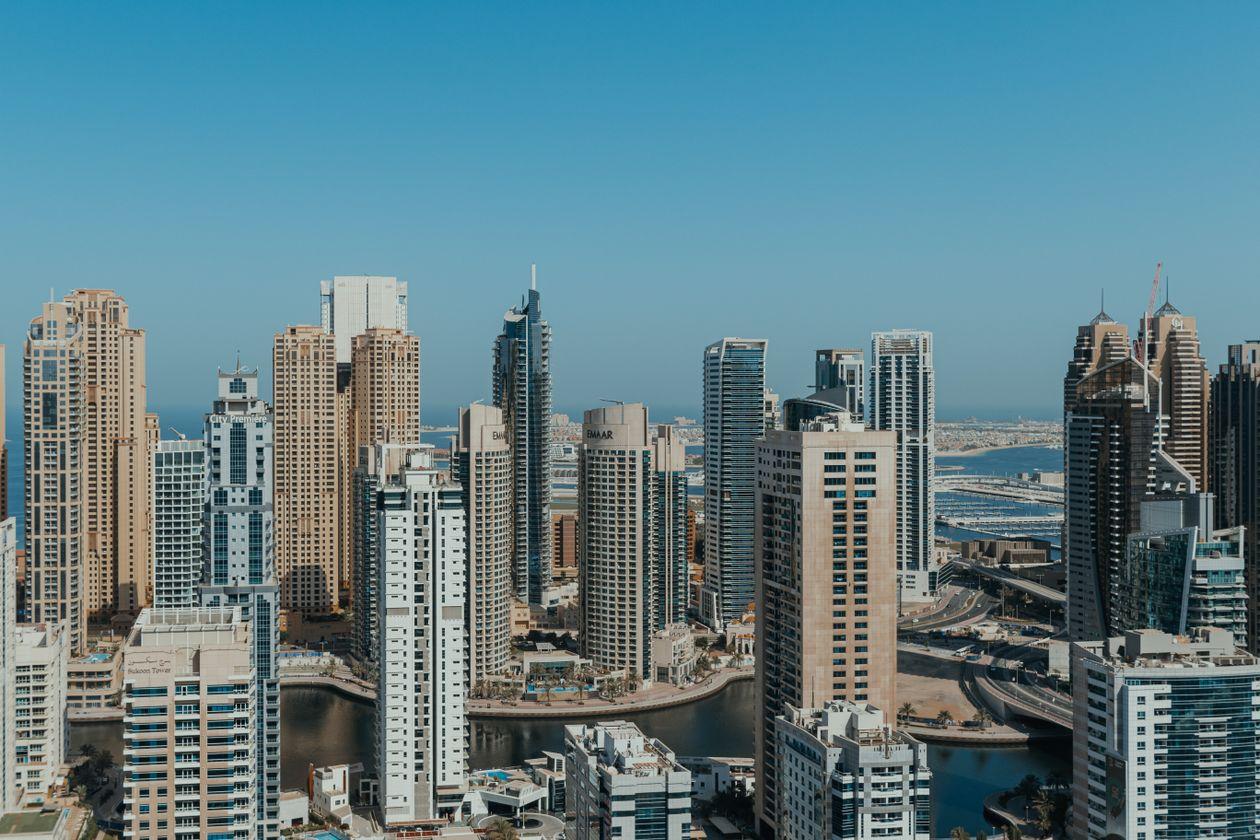
Property Taxes in the UAE for Foreign Buyers are one of the main reasons the Emirates attract investors worldwide. Buy a flat in Dubai or Abu Dhabi in your own name and you pay no annual property tax, no tax on the profit when you sell, and no personal income tax on the rent. The tax bill is replaced by one-off fees and yearly service charges. This guide explains who can buy, what you pay at purchase, what you pay every year, and how VAT and corporate tax fit in.
Who Can Buy Property in the UAE?
Foreign buyers can own property in the UAE, but only in designated areas. In Dubai, foreigners buy freehold in areas such as Dubai Marina, Downtown Dubai, Palm Jumeirah, Jumeirah Village Circle, Business Bay and Dubai Hills Estate. Freehold means you own it outright and your name goes on the title deed at the Dubai Land Department. In Abu Dhabi, foreign buyers can own freehold in investment zones such as Yas Island, Saadiyat Island and Al Reem Island. Outside these areas, ownership is usually leasehold for a fixed long term. Our guide to how to buy property in Dubai as a foreigner covers the purchase process step by step.
You do not need UAE residency to buy, and a purchase can be completed from abroad. Non-resident buyers typically borrow around 50 to 60 per cent of the property value, while residents can borrow up to 80 per cent. A property investment of AED 2,000,000 or more can also qualify you for the 10-year Golden Visa for you and your family, with no need to move to the country full time.
The Headline Fact: No Annual Property Tax, No Capital Gains Tax, No Income Tax on Rent
For an individual buying in their own name, the UAE charges no recurring annual property tax: you never receive a yearly bill simply because you own a flat or a villa. There is no capital gains tax on the profit when you sell, and no personal income tax on the rent, so the rent is yours in full as far as the UAE is concerned. This is the core of Property Taxes in the UAE for Foreign Buyers: the tax burden is close to zero. In the UK an owner pays council tax every year, stamp duty on purchase and capital gains tax on sale, while property taxes in France include an annual tax on the property itself as well as tax on rental income.
What You Pay When You Buy: The DLD Transfer Fee
The largest single cost when buying in Dubai is the Dubai Land Department transfer fee, at 4 per cent of the purchase price. By law it is split 2 per cent to the buyer and 2 per cent to the seller, but in practice the buyer almost always pays the full 4 per cent, and the contract should state this. The fee is paid at the transfer appointment, usually at a DLD-approved trustee office, by manager’s cheque, and it applies to ready and off-plan purchases alike. Abu Dhabi charges 2 per cent on transfer rather than Dubai’s 4 per cent, and foreign buyers can own freehold there in investment zones such as Yas Island, Saadiyat Island and Al Reem Island.
On an off-plan purchase the 4 per cent fee is usually registered through the Oqood system and is often due when you sign the contract, although some developers cover it as a promotion. If you resell an off-plan unit before handover, the fee is charged again on the new price, to the new buyer. Always confirm who pays the fee before you sign, because it is the biggest line in your budget.
Registration, Title Deed and Trustee Fees
On top of the 4 per cent transfer fee, buyers pay several smaller fixed charges. The title deed issuance fee is typically around AED 580 for a ready apartment or villa, with small knowledge and innovation fees of about AED 10 each added on. The registration trustee fee, paid to the DLD-approved office that carries out the transfer, is AED 2,000 for properties under AED 500,000 and AED 4,000 for properties at or above AED 500,000, plus 5 per cent VAT on the trustee fee. These amounts are fixed and the same at every trustee office.
If you buy with a mortgage, the DLD charges a mortgage registration fee of 0.25 per cent of the loan amount, plus about AED 290 in administration. The bank will also charge for a valuation, typically AED 2,500 to AED 3,500, and an arrangement fee of up to 1 per cent of the loan, plus VAT. Since February 2025, UAE banks no longer let buyers add the DLD fee and the agency commission to the mortgage, so a financed buyer needs roughly 26 to 28 per cent of the price in cash: the 20 per cent deposit plus the full fee stack.
Agency Commission and Other Purchase Costs
Agency commission is not a government fee, but it is one of the biggest costs in a resale purchase. The Dubai market standard is 2 per cent of the price, plus 5 per cent VAT on the commission, usually paid by the buyer. The rate is not fixed by law and can be negotiated, so agree it in writing before you make an offer. On an off-plan purchase the developer normally pays the broker, so the buyer typically pays none.
A few smaller costs complete the picture. The developer issues a no-objection certificate, confirming no service charges are outstanding; it typically costs AED 500 to AED 5,000 and is usually paid by the seller, so record this in the sale agreement. When you move in, the Dubai Electricity and Water Authority takes a refundable deposit of AED 2,000 for an apartment or AED 4,000 for a villa, plus a small connection fee. Altogether, a cash buyer of a ready property should budget roughly 6 to 8 per cent of the price in total transaction costs, and a buyer with a mortgage roughly 7 to 9 per cent.
Worked Example: Buying a Ready Apartment for AED 2,000,000
These figures use the standard rates above for a cash purchase of a ready apartment in Dubai at AED 2,000,000, with no mortgage and no developer promotion.
- DLD transfer fee, 4 per cent of AED 2,000,000: AED 80,000
- Registration trustee fee, AED 4,000 plus 5 per cent VAT: AED 4,200
- Title deed fee, including small administrative charges: about AED 580
- Agency commission, 2 per cent plus 5 per cent VAT: AED 42,000
- Total one-off costs: about AED 126,780, or roughly 6.3 per cent of the price
The buyer should therefore have about AED 2,127,000 available on transfer day, before moving costs and furnishing. With a mortgage, add the mortgage registration, valuation and arrangement fees, and remember the deposit and all the fees above must be paid in cash under the rules in force since February 2025.
Yearly Costs of Owning: Service Charges and the Housing Fee
The main yearly cost of owning property in the UAE is the service charge, which is not a tax. Every apartment building and villa community charges owners an annual fee covering maintenance, cleaning, security, lifts, pools, gyms and common areas. The amount depends on the building and the size of your unit, and is set by the owners’ association. Service charges are usually billed quarterly, and the seller must clear any outstanding balance before the transfer, as the no-objection certificate proves.
Dubai Municipality also charges a housing fee of 5 per cent of the annual rent, collected monthly through the DEWA electricity and water bill. This fee applies to the occupant, so in practice the tenant pays it as part of their monthly DEWA bill, not the owner as a separate tax. Buildings insurance is a further yearly cost: not a tax, but most owners insure the structure and contents, and some mortgage lenders require it.
VAT on Property in the UAE
The UAE charges value added tax at 5 per cent, and property is treated differently by type and use. There is no VAT on the price of a residential property: the first sale of a new home within three years of completion is zero-rated, and later residential sales are exempt. VAT does apply to the services around the purchase, including the agency commission and the trustee fee.
Commercial property is different. The sale or lease of a commercial unit, such as an office or a shop, is generally charged at the standard 5 per cent VAT rate. If you buy one, budget for 5 per cent VAT on the price as well as the DLD fee, and if you let one, the rent is generally subject to 5 per cent VAT, while residential leases are exempt. For comparison, property taxes in Spain work very differently, with an annual property tax and transfer taxes that vary by region.
Corporate Tax: When It Can Apply
The UAE introduced a federal corporate tax for financial years starting on or after 1 June 2023, at a headline rate of 9 per cent for companies and licensed business activities above the legal thresholds. An individual who owns a property in their own name and lets it out does not pay corporate tax on the rent. But the position changes if you hold the property through a company, or run a licensed real estate business such as buying and selling properties as a trade: then the income can fall inside the corporate tax net, depending on how the activity is structured and where the company is registered.
Most foreign buyers who purchase one or two properties in their own names will never meet the corporate tax rules. The risk appears when a purchase is made through a company for convenience, or when an investor scales up to a portfolio that looks like a business. If you plan to buy through a company, take advice first: the ownership structure is much harder and more expensive to change afterwards. Property taxes in Germany show the opposite approach, where rental income is taxed as personal income from the first euro.
Selling: No Capital Gains Tax, But Your Home Country May Tax You
When you sell a UAE property, the UAE charges no capital gains tax on the profit. The buyer pays the 4 per cent DLD transfer fee on the new sale, and you need a no-objection certificate from the developer confirming your service charges are paid up. If you sell before handover, the new buyer pays the transfer fee again and you may need the developer’s consent.
Your home country’s tax picture is separate and often very different. Most countries tax residents on worldwide income, so the rent you collect in Dubai and the gain you make when you sell may both be taxable where you live. The UK taxes rental income and capital gains on overseas property, and the same applies to buyers from the United States, where buying property in the USA as a foreigner comes with its own federal and state tax rules. Ask a tax adviser at home what you will owe there before you buy: that is usually the larger bill.
Common Mistakes Foreign Buyers Make
The most common mistake is budgeting only for the purchase price: a buyer who agrees AED 2,000,000 for a flat and then finds another AED 127,000 in fees on transfer day is in trouble, especially since banks no longer lend against those fees. The second is treating the service charge as optional; it is not, and unpaid service charges block the sale through the no-objection certificate. The third is assuming that because the UAE charges no tax, no tax is due anywhere: your home country almost certainly has a claim on the rent and the gain. A fourth is buying through a company without understanding corporate tax, and a fifth is forgetting VAT on commercial property. Finally, many buyers skip independent legal advice, but a short review by a UAE conveyancer before you sign is a small cost next to the price of the property.
Frequently Asked Questions
Is there an annual property tax in the UAE?
No. Individual owners pay no annual property tax in the UAE. The recurring yearly cost is the service charge set by the building or community, a maintenance fee, not a tax. Dubai Municipality also charges a housing fee of 5 per cent of the annual rent, collected from the occupant through the DEWA bill.
Do foreign buyers pay tax on rental income from a UAE property?
Not in the UAE. An individual who owns a property in their own name pays no UAE income tax on the rent. Your home country may still tax it, because most countries tax residents on worldwide income.
What is the DLD transfer fee and who pays it?
The Dubai Land Department charges 4 per cent of the purchase price on a sale. By law it is split 2 per cent to the buyer and 2 per cent to the seller, but in practice the buyer almost always pays the full 4 per cent, at the transfer appointment at a DLD-approved trustee office.
Is there capital gains tax when I sell a property in the UAE?
No. The UAE charges no capital gains tax on the profit from selling a property. The buyer pays the DLD transfer fee on the new sale. Your home country may still tax the gain, so take advice there before you sell.
Do I pay VAT when I buy a property in the UAE?
Not on the price of a residential property: the first sale of a new home is zero-rated and later residential sales are exempt. VAT at 5 per cent does apply to services such as the agency commission and the trustee fee, and to the sale and lease of commercial property.
Can a property purchase give me a UAE visa?
Yes. A property investment of AED 2,000,000 or more can qualify you for the UAE’s 10-year Golden Visa for you and your family, with no need to live in the country full time. Confirm the current requirements before you buy for this reason.
In short, Property Taxes in the UAE for Foreign Buyers are unusually light: no annual property tax, no capital gains tax and no income tax on rent for individuals. The real cost sits in the one-off fees, above all the 4 per cent DLD transfer fee, the trustee and title deed charges, the 2 per cent agency commission and, for financed buyers, the mortgage costs. Add the yearly service charge, watch out for VAT on commercial property and corporate tax if you buy through a company, and remember your home country may still tax the rent and the gain. Budget for the full cost before you agree a price, and confirm current fees with the Dubai Land Department and a qualified adviser. This guide is general information, not tax advice.