by Amir Iqbal
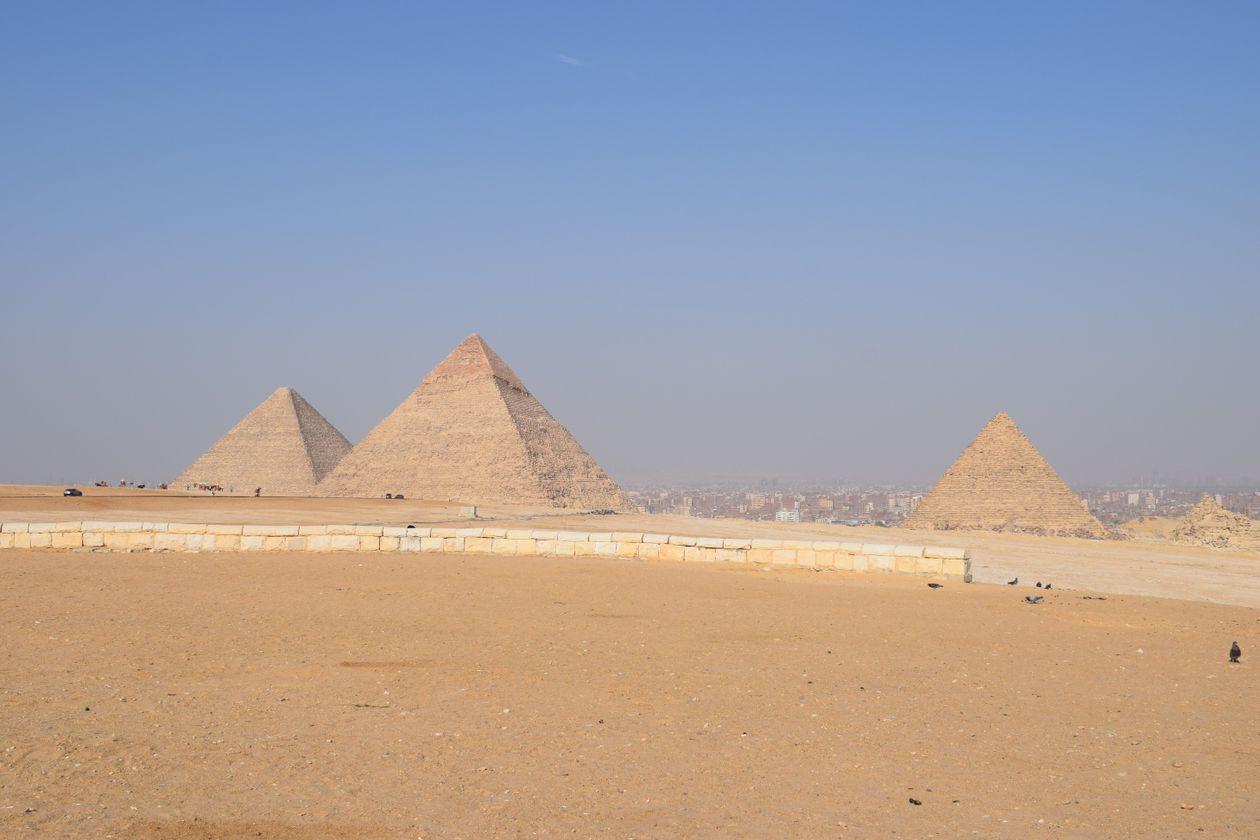
Egypt offers some of the lowest property prices in the Mediterranean region, but the tax bill is not as simple as the price tag suggests. This guide explains property taxes in Egypt for foreign buyers: what you can own, what registration costs, the annual real estate tax, the tax on rent, and the tax on sale.
| Tax or fee | Rate | When you pay it |
|---|---|---|
| Registration fee | Fixed by area, capped at EGP 2,000 | On purchase |
| Annual real estate tax | 10% of net assessed rental value | Every year, in two instalments |
| VAT on a new home | Exempt for residential units | On purchase |
| Tax on rental income | Progressive 0% to 27.5% after a 50% deduction | Every year on the rent |
| Disposal tax on sale | 2.5% of the gross sale price | On sale, within 60 days |
Who Can Buy Property in Egypt From Abroad
Foreigners can buy property in Egypt, but the right is not unlimited. The governing law is Law No. 230 of 1996. Under Article 2, a non-Egyptian may own no more than two properties anywhere in Egypt, each for the private residence of the owner and his family. Each property must not exceed 4,000 square metres, and none may be a registered antiquity. The Prime Minister may waive the two-property and area limits.
Three further conditions catch buyers out. First, a foreign owner may not sell for five years, unless an exception is granted. Second, a structure must be built on vacant land within five years of purchase. Third, some land is closed to foreign ownership: agricultural land, land in Sinai and in border and military zones, and heritage properties. In Sharm El Sheikh, foreigners generally hold usufruct rights for up to 99 years rather than freehold; in designated tourist areas such as Hurghada, a 2005 resolution gives foreigners equal freehold rights.
One honest warning: press reports in 2026 describe the two-property cap as scrapped for buyers paying in foreign currency from abroad, but we could not verify the legal instrument, and the government’s April 2026 procedures sheet still quotes the original text. Treat the limit as the law until your lawyer confirms otherwise. Before you pay a deposit, check the developer’s licence and that the unit is free of mortgages and court disputes.
Registration and Purchase Costs
Ownership in Egypt is only fully protected once it is registered. The buyer registers the contract at the Real Estate Registration Office, and registration makes the title enforceable against third parties. An unregistered contract is valid between buyer and seller, but it does not protect you if the seller sells the same unit again or if a creditor claims it.
Registration became cheaper under Law 9 of 2022, which replaced the old percentage-based fee with a fixed fee set by area, capped at EGP 2,000: EGP 500 up to 100 square metres, EGP 1,000 up to 200, EGP 1,500 up to 300 and EGP 2,000 above that. The law set a 30-day target where the documents are in order, although in practice it can take longer.
On top of the registration fee, budget for notary and authentication costs of roughly 0.5% of the price, and for a lawyer — typically EGP 25,000 to EGP 50,000. Your lawyer should verify the chain of title, check for mortgages and court cases, and confirm the unit’s area matches the registered survey. Keep a paper trail for every payment.
Annual Real Estate Tax
Egypt charges an annual real estate tax on built property under Law No. 196 of 2008. The tax is 10% of the net annual rental value, as assessed by a government committee — not of the market price and not of the rent you actually charge. Values are reassessed in five-year cycles.
Before the 10% rate applies, a maintenance allowance is deducted: 30% of the assessed annual rental value for a residential unit and 32% for a non-residential unit. A unit with an assessed value of EGP 240,000 therefore has a net value of EGP 168,000, and the tax before any exemption is EGP 16,800 a year.
The exemption is where the law changed most recently. Law 3 of 2026, published on 2 April 2026, raised the primary-residence exemption from EGP 24,000 to EGP 100,000 of net annual rental value. The exemption covers one unit only: the taxpayer’s primary residence. A second home or a holiday chalet carries no exemption at all — it is taxed from the first pound. The Authority’s own English FAQ page still shows the old EGP 24,000 figure, so confirm the current threshold with your adviser; sources also disagree on whether the EGP 100,000 applies before or after the 30% deduction.
The tax is due on 1 January each year and is paid in two equal instalments, by the end of June and the end of December. The tax follows the unit, not the passport: nationality does not appear in the exemption, which turns only on whether the unit is your primary residence. Buildings under construction, state-owned property, places of worship and registered charity premises are exempt.
VAT on New Property
Value added tax rarely touches a foreign buyer of a home in Egypt. Under VAT Law No. 67 of 2016, the sale and rental of residential property is exempt from VAT, including a new unit bought from a developer, so a new flat carries no VAT on top of the price. The exemption does not cover everything: commercial and administrative units are subject to a 5% schedule tax on their first sale, so if you buy a shop or an office rather than a home, budget for that 5%.
Tax on Rental Income
Rental income from Egyptian property is taxable in Egypt whether or not you live there, under the progressive personal income tax rates rather than a single flat rate. The key point is the deduction: 50% of the gross rental income is deducted as a deemed allowance for costs, so only the remaining 50% enters the tax calculation. Real estate tax paid on the property may also be deductible.
The resulting taxable rental income is taxed at the progressive individual rates. For 2025–26 the bands are 0% on the first EGP 40,000, 10% to EGP 55,000, 15% to EGP 70,000, 20% to EGP 200,000, 22.5% to EGP 400,000, 25% to EGP 1,200,000 and 27.5% above that. Because only half the rent is taxed, the effective rate on the gross rent is far lower than the headline top rate. There is no general withholding by the tenant, so the obligation to declare and pay rests on you: file an annual return with the Egyptian Tax Authority and keep your records.
Capital Gains Tax When You Sell
Egypt does not charge a conventional capital gains tax on the sale of a home by an individual. Instead, the seller pays a real estate disposal tax of 2.5% of the gross sale price under Article 42 of the Income Tax Law No. 91 of 2005, kept in force by Law 151 of 2026. The tax is charged on the whole price with no deduction for what you paid or for improvements, so it applies whether you made a profit or a loss, and the seller must pay it within 60 days of the sale.
On a sale price of EGP 9,000,000 the tax is EGP 225,000, even if the seller made only EGP 500,000 of gain, and even if the seller made no gain at all. The buyer does not withhold it; the seller declares and pays it, and the registration of the buyer’s title is normally held up until the disposal tax is settled. If you sell as part of a professional trading activity, the gain is instead taxed as business income at the progressive rates.
Property acquired by inheritance is not taxed as a disposal, and gifts to the government, public bodies and public-interest projects are also exempt. There is no published general exemption for selling your own main home, so do not assume one exists — confirm the position with a tax adviser before you agree a price.
Inheritance and Passing Property On
Egypt has no inheritance tax. The tax was abolished in 1996, so no tax is charged when property passes to heirs, and the disposal tax does not apply to the inheritance itself. Muslim estates are divided under Islamic inheritance rules; non-Muslim estates under the personal law of the deceased, and a will made under that law is recognised in Egypt.
Two points matter for a foreign owner. First, the ownership limits in Law 230 of 1996 do not apply to inheritance: Article 1 expressly excludes property acquired by inheritance. Second, the heirs still need to register the inherited title, which requires the death certificate, proof of heirship and, where there is a will, the probated will. A foreign owner should therefore make a will and keep the title documents in one place.
Worked Example: Buying, Renting and Selling a Flat in New Cairo
Take a foreign buyer who purchases a 150 square metre flat in New Cairo for EGP 6,000,000, about US$125,000 at roughly EGP 48 to the dollar. The registration fee for a unit of 100 to 200 square metres is EGP 1,000. Notary and authentication costs run to about 0.5% of the price, or EGP 30,000, and legal fees are about EGP 30,000. The total cost of buying is therefore about EGP 6,061,000, and no VAT is charged because the flat is residential.
Suppose the assessed annual rental value is EGP 240,000. After the 30% maintenance deduction the net value is EGP 168,000. If the flat is the owner’s primary residence, the EGP 100,000 exemption under Law 3 of 2026 leaves EGP 68,000 taxable, and the annual real estate tax is EGP 6,800 a year. If it is a second home or a holiday property, there is no exemption and the tax is EGP 16,800 a year.
Suppose the owner rents the flat out for EGP 480,000 a year. The 50% deemed deduction leaves taxable rental income of EGP 240,000. The tax is 0% on the first EGP 40,000, 10% on the next EGP 15,000 (EGP 1,500), 15% on the next EGP 15,000 (EGP 2,250), 20% on the next EGP 130,000 (EGP 26,000) and 22.5% on the remaining EGP 40,000 (EGP 9,000) — EGP 38,750 in total, about 8% of the gross rent. After income tax of EGP 38,750 and real estate tax of EGP 16,800, the net rent is EGP 424,450 a year — about 7% of the purchase price.
After six years the owner sells for EGP 9,000,000. The disposal tax is 2.5%, or EGP 225,000, paid within 60 days. The owner receives EGP 8,775,000 after the tax, against a total purchase cost of about EGP 6,061,000 — a gain of about EGP 2,714,000. The tax is charged on the price, not the gain, so if the flat had sold for EGP 6,000,000, EGP 150,000 of tax would still be due with no gain at all.
Common Mistakes Foreign Buyers Make
The first is buying without registering: an unregistered contract leaves the buyer exposed if the seller sells the same unit twice. The second is assuming the annual real estate tax is negligible; under Law 3 of 2026 the exemption is higher, but it covers one primary residence only, and a second or holiday home is taxed from the first pound. The third is budgeting for a capital gains tax on the profit and forgetting that the 2.5% disposal tax is charged on the whole sale price, so it bites even on a sale at a loss. The fourth is not declaring rental income, on the assumption that the tenant does not withhold it; the obligation to file rests on the landlord. The fifth is relying on press reports about the two-property cap without a lawyer confirming the legal basis.
Frequently Asked Questions
Can a foreigner buy property in Egypt?
Yes, under Law No. 230 of 1996. A non-Egyptian may own up to two properties for private residence, each up to 4,000 square metres, and may not sell for five years without an exception. Agricultural land, Sinai, border and military zones and heritage properties are closed to foreign ownership.
How much is the annual property tax in Egypt?
The real estate tax is 10% of the net annual rental value after a 30% maintenance deduction. Under Law 3 of 2026 the primary-residence exemption is EGP 100,000, covering one unit only. A second or holiday home is taxed from the first pound. The tax is paid in two instalments, by the end of June and the end of December.
Do I pay VAT when I buy a home in Egypt?
No, for a residential unit. The sale and rental of residential property is exempt from VAT under Law No. 67 of 2016, including a new unit bought from a developer. Commercial and administrative units are different: a 5% schedule tax applies on their first sale.
How much tax do I pay on rental income in Egypt?
Rental income is taxed at the progressive personal rates of 0% to 27.5%, but only after a 50% deemed deduction. On gross rent of EGP 480,000 a year the taxable income is EGP 240,000 and the tax is EGP 38,750, about 8% of the gross rent. The tenant does not withhold it, so you must file an annual return yourself.
What tax do I pay when I sell property in Egypt?
The seller pays a real estate disposal tax of 2.5% of the gross sale price under Article 42 of the Income Tax Law, within 60 days of the sale. It is charged on the whole price with no deduction for the purchase cost, so it applies even if you made no gain. Inherited property and gifts to public bodies are exempt.
Is there inheritance tax in Egypt?
No. Egypt abolished inheritance tax in 1996. Muslim estates are divided under Islamic inheritance rules and non-Muslim estates under the personal law of the deceased. The two-property limit does not apply to inherited property, but the heirs must still register the inherited title.
That is the full picture of property taxes in Egypt for foreign buyers: a two-property limit under Law 230 of 1996, registration capped at EGP 2,000, an annual real estate tax of 10% of net rental value with a EGP 100,000 primary-residence exemption, no VAT on a residential purchase, progressive tax on rent after a 50% deduction, and a 2.5% disposal tax on the whole sale price. Our guides to property taxes in the UAE for foreign buyers, property taxes in Turkey for foreign buyers, property taxes in Greece for foreign buyers, property taxes in Spain for foreign buyers and property taxes in Italy for foreign buyers cover the same ground for those countries.