
 by Amir Iqbal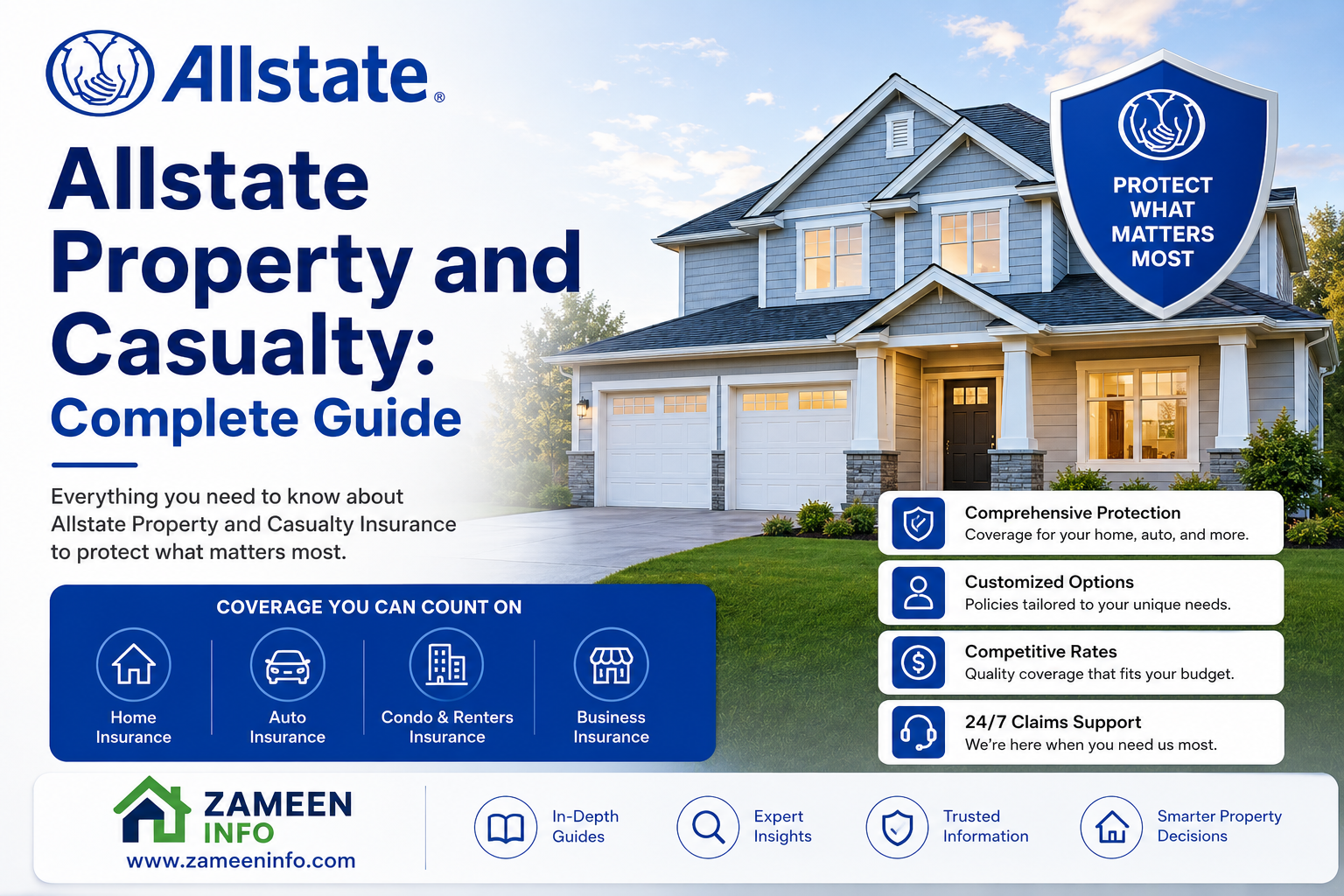
Introduction
Allstate Property and Casualty is a term many people search when they want to understand Allstate’s property insurance, home insurance, auto insurance, and personal protection products. For homeowners, renters, drivers, and families, Allstate is one of the well-known names in the American insurance market. The company is widely recognized for its “You’re in Good Hands” brand identity and for offering different types of personal insurance coverage.
When people search for Allstate Property and Casualty Insurance Company, they are usually looking for one of three things. First, they may want to confirm whether Allstate is a real licensed insurance company. Second, they may want to understand what an Allstate property insurance policy covers. Third, they may be comparing Allstate home insurance with other insurance companies before buying a policy.
This guide explains Allstate Property and Casualty in simple words. It covers what Allstate does, what Allstate is known for, what personal property protection means, how Allstate home insurance works, and how the Allstate New Jersey Allstate Property and Casualty Insurance Company fits into the larger Allstate insurance group.
This article is for informational purposes only. Insurance coverage, availability, prices, limits, exclusions, and discounts can vary by state, Allstate Property type, policy form, and individual customer profile. Always review the official policy documents or speak with a licensed insurance agent before making a final decision.
What Is Allstate Property and Casualty?
Allstate Property and Casualty usually refers to Allstate Property and Casualty Insurance Company, one of the insurance companies connected with the Allstate insurance group. Property and casualty insurance is a broad category. It includes insurance that protects property, such as homes, vehicles, and belongings, and insurance that protects against liability, such as damage or injury claims made by others.
In simple words, Allstate Property insurance helps protect things you own. Casualty insurance helps protect you if you become legally responsible for damage or injury to someone else. Home insurance, renters insurance, condo insurance, landlord insurance, and auto insurance often include both property and casualty protection.
The Allstate Property and Casualty Company name may appear on policy documents, insurance filings, claim papers, or state insurance department records. This does not always mean the customer is dealing with a separate brand. In many cases, Allstate uses different underwriting companies depending on the state, product, and policy type.
For the customer, the important thing is to know which company is underwriting the policy, what the policy covers, what exclusions apply, and how claims are handled.
What Is Allstate Known For?
Allstate is known for insurance products designed to protect homes, cars, personal belongings, and financial security. The company is also known for its long-running “Good Hands” branding. Many customers recognize Allstate through its slogan, agency network, digital quote system, mobile app, and bundle options.
Allstate is especially known for:
- Auto insurance
- Homeowners insurance
- Renters insurance
- Condo insurance
- Landlord insurance
- Motorcycle insurance
- Personal umbrella insurance
- Identity protection services
- Claims support and policy management tools
- Bundling options for home and auto insurance
For homeowners, Allstate home insurance is one of the most searched products. It is designed to protect the physical structure of a home, personal belongings inside the home, liability risks, and additional living expenses if a covered loss makes the home temporarily unlivable.
For renters, Allstate renters insurance usually focuses on personal belongings, liability, guest medical coverage, and temporary housing expenses. For auto customers, Allstate is known for car insurance coverage, safe-driving tools, accident protection options, and discounts.
What Does Allstate Do?
Allstate provides insurance products that help customers manage financial risk. Insurance does not stop accidents, storms, theft, fires, or liability claims from happening. Instead, it helps reduce the financial impact when a covered event occurs.
For example, if a covered fire damages your home, a home insurance policy may help pay for repairs or rebuilding. If theft damages or removes personal belongings, personal property coverage may help replace them. If someone is injured on your Allstate Property and you are legally responsible, liability coverage may help pay for legal or medical costs up to the policy limits.
Allstate also gives customers tools to get quotes, manage policies, file claims, view documents, contact agents, and access digital support. Depending on the location and policy, customers may buy coverage online, through an agent, through the app, or by phone.
In short, Allstate helps individuals and families protect against common financial losses related to property, vehicles, liability, and personal risk.
Understanding Property and Casualty Insurance
To understand Allstate Property and Casualty, it is important to understand the meaning of property and casualty insurance.
Property insurance protects physical things. This can include your house, garage, personal belongings, furniture, electronics, appliances, clothing, or other covered property. In a home insurance policy, property coverage may include dwelling coverage, other structures coverage, and personal property coverage.
Casualty insurance protects against liability. This means it may help if you are legally responsible for injury or property damage caused to another person. For example, if a visitor slips and falls at your home, liability coverage may help with legal expenses or medical costs, depending on the policy terms.
Most homeowners insurance policies combine both Allstate Property and casualty coverage. That is why the term “property and casualty insurance” is common in the insurance industry.
Allstate Home Insurance: What It Usually Covers

Allstate home insurance is designed to protect your home, belongings, and liability exposure. The exact coverage depends on the policy, state, limits, and endorsements, but a standard homeowners insurance policy commonly includes several major coverage parts.
1. Dwelling Coverage
Dwelling coverage helps protect the main structure of your home. This may include the walls, roof, floors, built-in systems, and attached structures. If a covered event damages the home, dwelling coverage may help pay for repair or rebuilding costs.
Common covered events may include fire, lightning, wind, hail, theft, vandalism, or certain types of sudden water damage. However, coverage varies by policy. Floods, earthquakes, wear and tear, pest damage, and maintenance-related damage are often excluded or require separate coverage.
2. Other Structures Coverage
Other structures coverage may help protect structures on the property that are not attached to the main home. Examples may include a detached garage, fence, shed, or gazebo. This coverage usually has a separate limit based on a percentage of the dwelling coverage.
3. Personal Property Coverage
Personal property coverage helps protect belongings inside the home. This may include furniture, clothes, electronics, appliances, kitchen items, and other personal possessions. Some policies may also protect belongings away from home, but limits and exclusions may apply.
Expensive items such as jewelry, watches, art, collectibles, musical instruments, and high-value electronics may have limited coverage unless they are scheduled separately or covered through an endorsement.
4. Liability Protection
Liability coverage helps protect your finances if you are legally responsible for another person’s injury or property damage. For example, if someone is injured on your property and makes a claim, liability coverage may help pay legal defense costs, settlements, or judgments up to the policy limit.
5. Guest Medical Protection
Guest medical coverage may help pay limited medical expenses if a guest is injured on your property, regardless of fault. This is usually a smaller coverage amount compared with liability protection.
6. Additional Living Expenses
If your home becomes unlivable because of a covered loss, additional living expenses coverage may help pay for temporary housing, meals, or other necessary expenses while repairs are completed. This is also called loss of use coverage.
What Is an Allstate Property Insurance Policy?
An Allstate property insurance policy is a contract between the policyholder and the insurance company. The policy explains what is covered, what is excluded, how much the company may pay, what deductible applies, and what responsibilities the policyholder has.
The policy includes several important parts:
- Declarations page
- Coverage limits
- Deductibles
- Covered perils
- Exclusions
- Endorsements
- Claim conditions
- Policy period
- Premium amount
- Named insured
- Property address
- Mortgage company details, if applicable
The declarations page is one of the most important documents. It summarizes the policy, including coverage limits and deductibles. However, the full policy form is also important because it explains the detailed terms, conditions, and exclusions.
Before buying or renewing an Allstate property insurance policy, homeowners should review the dwelling limit, personal property limit, liability limit, deductible, roof coverage terms, water damage coverage, and any special exclusions related to storms, floods, earthquakes, mold, or high-value items.
What Is Allstate Personal Property Protection?

Allstate Personal Property Protection refers to coverage that helps protect belongings such as furniture, electronics, clothing, appliances, and other personal items. In home insurance, condo insurance, or renters insurance, personal property protection is one of the most important coverage parts.
For example, if your laptop, television, furniture, or clothes are damaged by a covered fire or stolen during a covered theft claim, personal property coverage may help pay for repair or replacement. The amount paid depends on the policy limit, deductible, type of loss, and whether the policy uses actual cash value or replacement cost coverage.
Actual Cash Value vs. Replacement Cost
Actual cash value usually means the item’s value after depreciation. If your five-year-old television is damaged, the claim payment may reflect its used value, not the price of a new television.
Replacement cost coverage may help pay the cost to replace the damaged item with a new similar item, subject to policy terms. Replacement cost coverage is usually more valuable but may cost more.
Scheduled Personal Property
Some belongings have special limits. Jewelry, watches, cameras, antiques, firearms, art, and collectibles may need additional coverage. This is sometimes called scheduled personal property or a personal articles floater. If you own expensive items, ask the insurer or agent whether standard personal property coverage is enough.
Allstate New Jersey Property and Casualty Insurance Company
The Allstate New Jersey Property and Casualty Insurance Company is important for customers searching from New Jersey or reviewing New Jersey policy documents. Insurance companies often operate through state-specific underwriting companies because insurance is regulated at the state level in the United States.
If your policy documents mention Allstate New Jersey Property and Casualty Insurance Company, it likely means the policy is connected to an Allstate underwriting entity authorized for New Jersey insurance business. New Jersey customers should check their policy documents carefully because state rules, company names, coverage forms, deductibles, and claim procedures may differ from other states.
Customers in New Jersey should also pay attention to:
- Wind and storm deductibles
- Home replacement cost limits
- Personal property limits
- Water damage coverage
- Liability limits
- Flood insurance needs
- Local building costs
- Policy exclusions
- Claims contact details
- State insurance department resources
New Jersey homeowners should not assume every type of storm or water damage is covered. Flood insurance is usually separate from standard homeowners insurance. If a property is near the coast, in a flood zone, or exposed to storm surge, separate flood coverage may be necessary.
Allstate Home Insurance Discounts
Allstate home insurance may offer different discounts depending on the state and customer profile. Discounts can change over time and may not be available everywhere, but common home insurance discounts may include:
- Home and auto bundle discount
- Protective device discount
- Claim-free discount
- New home discount
- Responsible payment discount
- Early signing discount
- Automatic payment discount
- Loyalty discount
- Smoke-free home discount
- Security system discount
Bundling is one of the most common ways customers try to save money. A customer may buy both home insurance and auto insurance from Allstate to qualify for a multi-policy discount. However, bundling is not always automatically the cheapest option. It is still smart to compare quotes from multiple companies.
How Much Does Allstate Home Insurance Cost?
The cost of Allstate home insurance depends on many factors. There is no single price for every homeowner because insurance pricing is based on risk. A home in a storm-prone area may cost more to insure than a similar home in a lower-risk area. A larger home with high rebuilding costs may need higher dwelling coverage and therefore a higher premium.
Important pricing factors include:
- Location
- ZIP code
- Home age
- Roof age
- Construction type
- Replacement cost
- Claims history
- Credit-based insurance score, where allowed
- Deductible amount
- Coverage limits
- Safety devices
- Distance from fire station
- Local weather risks
- Bundled policies
- Selected endorsements
The best way to know the cost is to request a personalized quote. Homeowners should compare not only the premium but also the coverage limits, deductibles, roof terms, water damage terms, and claim reputation.
A cheaper policy is not always better if it removes important coverage. A more expensive policy is not always better if it includes coverage you do not need. The right policy should balance price, coverage, claim support, and financial strength.
What Allstate Home Insurance May Not Cover
Many homeowners misunderstand what standard home insurance covers. A policy may protect against many sudden and accidental losses, but it does not cover everything.
Common exclusions may include:
- Flood damage
- Earthquake damage
- Normal wear and tear
- Pest damage
- Mold not caused by a covered event
- Sewer backup without endorsement
- Maintenance problems
- Intentional damage
- Business property beyond policy limits
- High-value items beyond special limits
- Certain dog bite or animal liability exclusions
- War or nuclear hazards
Flood damage is one of the biggest misunderstandings. Standard home insurance usually does not cover flood damage from rising water, storm surge, or overflowing bodies of water. Homeowners may need a separate flood insurance policy.
Earthquake coverage is also usually separate. In earthquake-prone areas, homeowners should ask about earthquake endorsements or separate earthquake policies.
How to File an Allstate Claim
Allstate customers can usually file claims online, through the mobile app, by phone, or through an agent. The process may vary depending on policy type and state.
A typical claim process may include:
- Report the claim as soon as possible.
- Provide policy and contact details.
- Explain what happened.
- Take photos or videos of the damage.
- Make temporary repairs if needed to prevent further damage.
- Keep receipts for emergency expenses.
- Work with the adjuster.
- Review the estimate.
- Receive payment according to policy terms.
- Complete repairs or replacement.
Policyholders should avoid throwing away damaged items before documenting them. They should also avoid making permanent repairs before the insurance company has had a chance to inspect the damage, unless immediate action is needed for safety or to prevent further loss.
Pros of Allstate Property and Casualty Coverage
Allstate has several strengths that make it attractive for many customers.
Strong Brand Recognition
Allstate is one of the most recognized insurance names in the United States. Many customers feel comfortable choosing a company they know.
Wide Range of Insurance Products
Allstate offers many personal insurance products, including auto, home, renters, condo, motorcycle, and landlord coverage. This can be helpful for customers who want multiple policies in one place.
Bundling Options
Customers may be able to bundle home and auto insurance. Bundling can simplify policy management and may reduce total premium costs.
Digital Tools
Allstate offers online quotes, mobile app access, claim tools, and digital policy management. This is useful for customers who prefer online service.
Personal Property Protection
Allstate home and renters insurance may include personal property protection, which helps cover belongings after a covered loss.
Agent Support
Customers who prefer human guidance may work with Allstate agents to review coverage options, discounts, and policy changes.
Cons and Things to Consider
No insurance company is perfect for every customer. Before choosing Allstate, consider the following points.
Prices Vary by State
Allstate may be affordable in one state and expensive in another. Rates depend heavily on location, risk, property type, and personal profile.
Coverage Can Differ
Coverage terms may vary by state and policy. A customer should not rely only on general descriptions. The actual policy document controls the coverage.
Discounts Are Not Guaranteed
Not every discount is available in every state. Eligibility may depend on the customer, property, and policy type.
Claim Experiences Can Differ
Some customers may have smooth claim experiences, while others may report delays or disagreements. This is common across the insurance industry, not only Allstate.
Separate Coverage May Be Needed
Flood, earthquake, sewer backup, high-value items, and business property may require separate coverage or endorsements.
Allstate vs. Other Insurance Companies
When comparing Allstate with other insurance companies, do not focus only on price. A good comparison should include coverage quality, claim service, financial strength, discounts, customer reviews, and policy flexibility.
Compare these points:
- Dwelling coverage amount
- Replacement cost coverage
- Personal property coverage
- Liability limits
- Deductible options
- Roof coverage
- Water damage coverage
- Flood insurance availability
- Discounts
- Claim process
- Customer service
- Mobile app tools
- Financial strength ratings
- Local agent availability
Allstate may be a good choice for customers who want a well-known insurer, home and auto bundling, digital tools, and broad coverage options. However, customers should still compare quotes from State Farm, GEICO, Progressive, Liberty Mutual, Farmers, Nationwide, USAA, Travelers, and other regional carriers depending on location.
Who Should Consider Allstate Home Insurance?
Allstate home insurance may be suitable for homeowners who want:
- A nationally recognized insurance brand
- Home and auto bundling options
- Online policy management
- Access to agents
- Personal property protection
- Liability coverage
- Coverage customization
- A company with broad insurance product options
It may also be useful for homeowners who want to keep multiple insurance policies under one provider. For example, a customer may choose Allstate for auto, home, renters, motorcycle, and umbrella insurance.
However, homeowners with high-value homes, coastal properties, older roofs, flood exposure, or expensive personal collections should carefully review policy limits and exclusions. They may need additional endorsements or a different insurance structure.
How to Choose the Right Allstate Property Insurance Policy

Before buying an Allstate property insurance policy, follow these steps:
1. Estimate Rebuilding Cost
Your dwelling limit should reflect the cost to rebuild your home, not simply the market value. Market value includes land, location, and demand. Rebuilding cost focuses on construction materials, labor, permits, and local building requirements.
2. Make a Home Inventory
Create a list of your belongings. Include photos, receipts, serial numbers, and estimated values. This helps you choose personal property coverage limits and makes claims easier.
3. Check Deductibles
A higher deductible may reduce your premium, but it also means you pay more out of pocket when filing a claim. Choose a deductible you can afford.
4. Review Exclusions
Read what the policy does not cover. Pay special attention to flood, earthquake, mold, roof, sewer backup, and high-value item exclusions.
5. Ask About Replacement Cost
Replacement cost coverage can be important for both the home and personal property. Ask whether the quote includes replacement cost or actual cash value.
6. Compare Multiple Quotes
Do not rely on only one quote. Compare at least three companies. Make sure the coverage limits are similar so the comparison is fair.
7. Review Every Year
Insurance needs change. Renovations, inflation, new belongings, home upgrades, and local construction costs can affect the right coverage amount. Review your policy at least once a year.
FAQs About Allstate Property and Casualty
What is Allstate known for?
Allstate is known for offering insurance products such as auto insurance, home insurance, renters insurance, condo insurance, motorcycle insurance, landlord insurance, and personal protection services. It is also widely recognized for its “You’re in Good Hands” slogan and its large network of agents and digital insurance tools.
What is the full name of Allstate?
The full name of Allstate is The Allstate Corporation. The company provides a wide range of insurance products, including auto, home, renters, life, and business insurance across the United States.
What does Allstate do?
Allstate provides insurance coverage that helps customers manage financial risk. Its policies may help pay for covered losses involving homes, cars, personal belongings, liability claims, and other insured risks. Allstate also offers quote tools, policy management, claim services, and customer support through agents, online accounts, and mobile apps.
What is Allstate Personal Property Protection?
Allstate Personal Property Protection is coverage that helps protect belongings such as furniture, electronics, clothes, appliances, and other personal items. If covered belongings are stolen or damaged by a covered event, personal property protection may help pay for repair or replacement, subject to policy limits, deductibles, and exclusions.
Which insurance company is Allstate?
Allstate is a major American insurance company that offers personal insurance products including auto, home, renters, condo, motorcycle, and other coverage options. Depending on the state and product, policies may be issued by different Allstate underwriting companies, such as Allstate Property and Casualty Insurance Company or Allstate New Jersey Property and Casualty Insurance Company.
Is Allstate Property and Casualty the same as Allstate?
Allstate Property and Casualty Insurance Company is part of the broader Allstate insurance structure. Customers may see this name on policy documents or state insurance records. The consumer-facing brand is Allstate, but the underwriting company may have a more specific legal name.
Does Allstate home insurance cover personal belongings?
Yes, Allstate home insurance generally includes personal property coverage for belongings such as furniture, clothing, electronics, and appliances. However, coverage limits, deductibles, and exclusions apply. High-value items may need additional coverage.
Does Allstate home insurance cover flood damage?
Standard homeowners insurance usually does not cover flood damage. Homeowners may need a separate flood insurance policy. This is especially important for homes in flood zones, coastal areas, or regions with heavy storm risk.
Is Allstate good for home insurance?
Allstate can be a good option for homeowners who want a well-known insurance company, bundling options, digital tools, agent support, and customizable coverage. However, the best insurance company depends on your location, property, budget, coverage needs, and claim expectations. Always compare quotes and policy terms.
What should I check before buying an Allstate property insurance policy?
Before buying, check the dwelling limit, personal property limit, liability coverage, deductible, roof coverage, replacement cost terms, water damage rules, exclusions, discounts, claim process, and available endorsements.
Can I bundle Allstate home and auto insurance?
Yes, Allstate commonly offers bundling options for customers who buy more than one policy, such as home and auto insurance. Bundling may help reduce premiums, but savings depend on eligibility and location.
Final Thoughts about Allstate Property and Casualty
Allstate Property and Casualty is an important search term for homeowners, renters, and policyholders who want to understand Allstate’s insurance structure. The Allstate Property and Casualty Insurance Company is one of the legal entities connected with Allstate’s property and casualty insurance business. In New Jersey, customers may also see the name Allstate New Jersey Property and Casualty Insurance Company on policy or regulatory documents.
Allstate Property and Casualty For everyday customers, the most important question is not only the company name but the actual policy coverage. Allstate home insurance may protect the dwelling, personal belongings, liability, guest medical expenses, and additional living expenses after a covered loss. However, every policy has limits and exclusions.
Before choosing Allstate home insurance or any property insurance policy, compare quotes, review coverage carefully, check deductibles, understand exclusions, and ask about additional protection for floods, earthquakes, sewer backups, and high-value belongings.