by Amir Iqbal
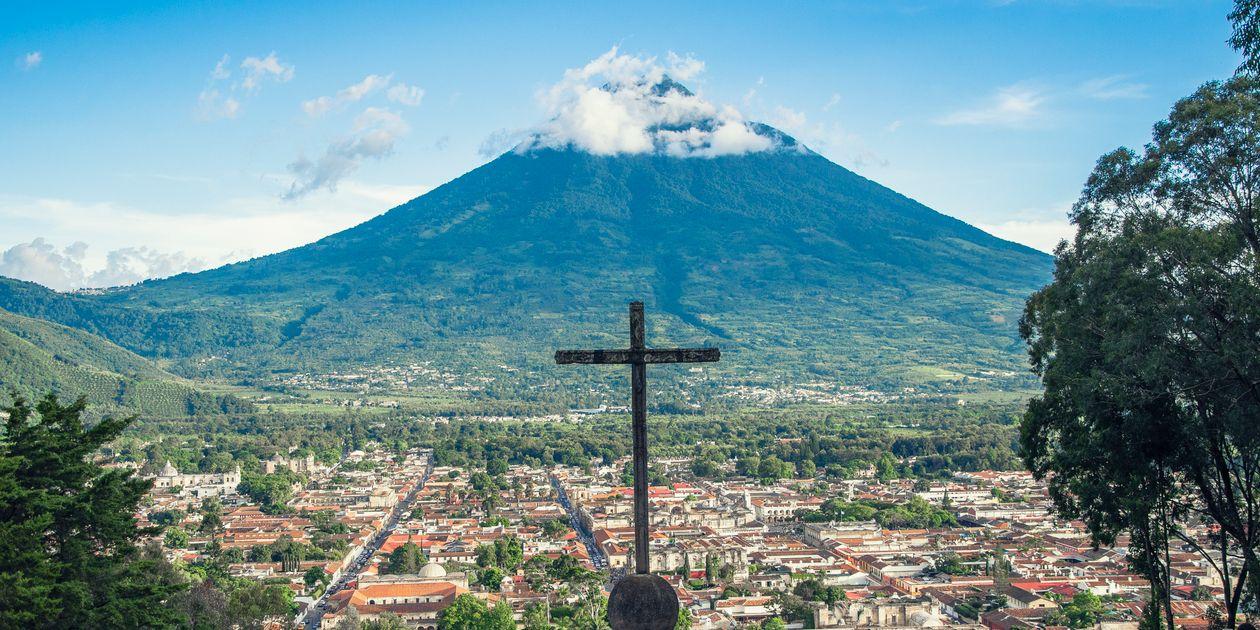
Guatemala is changing its property tax rules faster than almost any country in the region, and the direction is friendly to foreign buyers. A 2026 reform wipes out the annual property tax on homes and removes capital gains tax for individuals selling from 1 January 2027, and a separate 2026 decree repealed the inheritance tax. The old rules still matter, because they apply until the reform dates arrive and old tax debts are not cancelled. This guide to property taxes in Guatemala for foreign buyers explains every tax you will meet, gives the dates the new rules take effect, and works through a full example so you can budget before you sign.
Two facts shape everything else. First, Guatemala’s currency is the quetzal, GTQ, and this guide uses quetzales throughout, with US dollar equivalents at about GTQ 7.64 per dollar, the Banco de Guatemala reference rate in late October 2026. Second, the tax authority is the Superintendencia de Administración Tributaria, the SAT, and the registry is the Registro General de la Propiedad, the RGP. You need a Guatemalan tax number, a NIT, to buy, to pay the annual tax and to declare rental income, and you can get one without residency.
Who Can Own Property in Guatemala?
Foreigners buy Guatemalan property on the same terms as nationals, under Decreto 9-98, in their own name and with full ownership. There are two exceptions, and both are about location rather than nationality. The Constitution reserves a 15-kilometre strip along the land borders to Guatemalans of origin, so a foreigner cannot own land inside that strip, with exceptions for urban property and pre-1956 titles. Along the coast, lakes and rivers, the State holds reserve strips, 3 kilometres from the high-tide line on the coast, where land is leased from OCRET for up to 30 years rather than owned outright.
Outside those strips, the purchase follows a familiar route. A notary, who in Guatemala is also a lawyer, checks the title at the RGP, confirms the fiscal value and whether the annual tax is paid up, draws up the public deed, and registers the transfer. A normal purchase takes about 30 to 60 days. Get the NIT before or around the signing, since you need it for the deed, and if you cannot be there in person, an apostilled power of attorney lets someone sign for you, at extra cost. Mortgages for non-resident foreigners are rare, so most foreign buyers pay cash.
One-Off Taxes When You Buy
The main tax on a purchase depends on whether the property is new or a resale. A first sale from a developer carries 12% IVA, value added tax, instead of the stamp tax, but the IVA is normally already included in the developer’s price, so you add about 1.5% to 2.5% on top. Every later sale pays a 3% stamp tax, the timbres fiscales, on the higher of the declared price, an authorised appraisal and the fiscal value. The RGP will not record a transfer without proof that the tax is paid and that the last quarter of the annual property tax is paid.
The other buying costs are the notary, the registry and paperwork. Notary fees are negotiated and usually land at 1% to 2% of the price. RGP registration costs GTQ 160 plus GTQ 1.50 per GTQ 1,000 above GTQ 10,000, and the notarial stamp is capped at GTQ 300. The estate agent’s commission, about 5% plus IVA, is normally paid by the seller. Adding it up, buyers of a resale usually pay about 4% to 7% on top of the price, and a clean deal on a GTQ 1 million home comes to about GTQ 42,000 to GTQ 52,000. Plan for 7% or more if the file is messy: title clean-up, a power of attorney signed abroad, certified translations or a new survey all add cost.
Closing Costs at a Glance
| Charge | Typical range | Who pays |
|---|---|---|
| Stamp tax (timbres fiscales), resale | 3% of the higher of the price or fiscal value | Buyer |
| IVA, first sale from a developer | 12%, normally already in the price | Buyer, inside the price |
| Notary fee | About 1% to 2% of the price, negotiated | Buyer |
| RGP registration | GTQ 160 plus GTQ 1.50 per GTQ 1,000 above GTQ 10,000 | Buyer |
| Notarial stamp | Capped at GTQ 300 | Buyer |
| Estate agent commission | About 5% plus IVA | Seller, usually |
| Annual property tax (IUSI) | Up to 0.9% of the fiscal value; zero for homes from 26 November 2026 | Owner, every year |
Of the buying costs, the tax is the biggest part: the 3% stamp tax on a resale, or the 12% IVA built into a new-build price. The fees around it are fixed by tariff or negotiated, and only the stamp tax, the IVA and the RGP tariff are non-negotiable. The watch-outs are a deal that turns out to pay 12% IVA instead of 3% stamp tax, when a property is really a first sale, and unpaid annual tax, since the RGP will not register the transfer until the last quarter is paid.
The Annual Bill: IUSI, and the 2026 Reform
Guatemala’s annual property tax is the IUSI, the Impuesto Único Sobre Inmuebles, charged on the registered fiscal value at up to 0.9% a year, or 9 per thousand. It is the part of property taxes in Guatemala for foreign buyers that changed most in 2026. Decreto 18-2026, published on 28 August 2026, sets the IUSI rate at zero for residential and mixed-use homes from 26 November 2026, with no limit on the number of homes, and at 3, 6 or 9 per thousand for commercial property. The municipality should bill homes at zero from the first quarter of 2027, but old IUSI debts are not cancelled.
Until the reform applies, the old scale still governs: up to 0.9% a year of the registered fiscal value, which on a home registered at GTQ 764,000 is about GTQ 6,876 a year. Because the fiscal value is usually below the market price, the bill is smaller than the same rate on the purchase price would be. Ask the seller or your notary for the latest IUSI receipts before you buy, and check for unpaid quarters, since the RGP will not record your transfer until the last quarter is settled, and old debts survive the reform.
Tax on Rental Income
Rent from a Guatemalan property is taxable in Guatemala even if you live abroad. For a resident owner, the usual figure is about 7% of gross rent, from a 10% rate applied to 70% of the rent. On a two-bedroom let at GTQ 8,405 a month, that is about GTQ 7,060 a year. For an owner who lives abroad, the position is the part of property taxes in Guatemala for foreign buyers that is least settled: the best current reading of the law puts the figure at 25% of the gross rent, but the guides that report it say to ask the SAT in writing before relying on it, and this guide repeats that advice rather than presenting 25% as settled.
Short stays are taxed differently again. A short-term let can add 12% IVA and the 10% INGUAT lodging tax on top of the income tax, and a bill before Congress, Bill 6811, would extend that lodging tax to Airbnb bookings, although it is not law yet. If you plan to let short-term, budget for both the income tax and the lodging taxes, and check whether Bill 6811 has passed before your first booking. Get your NIT in place before the first rent is received, since you need it to declare the income, and keep the rental contracts and receipts.
Capital Gains Tax When You Sell
Capital gains on a Guatemalan property sale are taxed at 10% on the net gain, and that is the rate that applies to a sale completed on or before 31 December 2026. From 1 January 2027, Decreto 18-2026 exempts individuals from capital gains tax on property sales entirely, while companies, trusts and people registered as real estate businesses keep paying 10%. For most foreign buyers, who buy in their own name, that makes buying in your own name the better choice from 2027, and it removes one of the old reasons to hold through a company.
On top of the tax, budget the selling costs. Selling costs run about 6% to 8% of the price, mostly the estate agent’s commission at about 5% plus 12% IVA, which works out at 5.6% of the price. A deed dated in January 2027 rather than December 2026 can therefore save an individual seller 10% of the gain, which is a real reason to watch the calendar if you are close to a sale. The inheritance, legacy and donation tax was also repealed by Decreto 6-2026, in force since 1 April 2026.
Worked Example: A Guatemala City Home
To see how property taxes in Guatemala for foreign buyers add up in practice, suppose you buy a resale home in Guatemala City registered at GTQ 764,000, about USD 100,000 at GTQ 7.64 per dollar. The registered fiscal value is below the market price, which is normal, and this gap is an assumption for this example. Your own property’s fiscal value will be printed on its tax bills.
First, the one-off buying costs. The stamp tax is 3% of the registered value: 3% of GTQ 764,000 is GTQ 22,920. The notary charges 1% of the price, which is GTQ 7,640. RGP registration is GTQ 160 plus GTQ 1.50 per GTQ 1,000 above GTQ 10,000: the amount above GTQ 10,000 is GTQ 754,000, which is 754 units of GTQ 1,000, so the fee is GTQ 160 plus GTQ 1,131, which equals GTQ 1,291, or about GTQ 1,290. The notarial stamp is GTQ 300. The total is GTQ 22,920 plus GTQ 7,640 plus GTQ 1,290 plus GTQ 300, which equals GTQ 32,150, so the cash you need is GTQ 764,000 plus GTQ 32,150, which equals GTQ 796,150. That is about 4.2% of the price, inside the usual 4% to 7% range.
Next, the annual property tax. Before the reform, IUSI at 0.9% of the registered value is 0.9% of GTQ 764,000, which equals GTQ 6,876 a year. From 26 November 2026, the rate for a home is zero under Decreto 18-2026, so from the first quarter of 2027 the annual bill for this home is GTQ 0. Old IUSI debts are not cancelled, so any arrears from before the reform would still have to be settled.
Then the rent. You let the home for GTQ 8,405 a month, or GTQ 100,860 a year. As a resident owner, tax at about 7% of gross rent is 7% of GTQ 100,860, which equals GTQ 7,060 a year, so you receive GTQ 100,860 minus GTQ 7,060, which equals GTQ 93,800 a year. As an owner living abroad, the tax may be 25% of gross rent, which is GTQ 25,215 a year, leaving GTQ 75,645 a year, but that figure is not settled in the sources, so confirm it with the SAT in writing. On the resident basis, with the IUSI at zero after the reform, the GTQ 93,800 a year against the GTQ 796,150 you paid is a net yield of about 11.8% a year, which reflects the example rent rather than a promise about Guatemalan rents in general.
Now suppose you sell after five years for GTQ 950,000. The gain is GTQ 950,000 minus GTQ 764,000, which equals GTQ 186,000. If you sell in 2026 as an individual, capital gains tax at 10% is 10% of GTQ 186,000, which equals GTQ 18,600. If you sell from 1 January 2027 as an individual, the tax is GTQ 0 under Decreto 18-2026. The estate agent’s commission at 5% plus 12% IVA works out at 5.6% of the sale price, which is 5.6% of GTQ 950,000, or GTQ 53,200. So the net proceeds on a 2026 sale are GTQ 950,000 minus GTQ 18,600 minus GTQ 53,200, which equals GTQ 878,200, and on a 2027 sale they are GTQ 950,000 minus GTQ 53,200, which equals GTQ 896,800.
Common Mistakes Foreign Buyers Make
The most expensive mistake is buying inside the 15-kilometre border strip or on a coastal reserve strip, where a foreigner cannot own at all; check the location against those strips before you fall in love with a property. A second is budgeting the 3% stamp tax on a deal that is really a first sale, which pays 12% IVA. A third is skipping the IUSI check: unpaid quarters block registration at the RGP and old debts survive the 2026 reform. A fourth is assuming the non-resident rental rate is settled at 25% without asking the SAT in writing. A fifth is selling in December 2026 when a January 2027 deed would save an individual seller the 10% capital gains tax.
Frequently Asked Questions
Can a foreigner buy property in Guatemala? Yes. Foreigners buy on the same terms as nationals, in their own name and with full ownership. The exceptions are the 15-kilometre strip along the land borders, reserved to Guatemalans of origin, and the State coastal, lake and river reserve strips, where land is leased from OCRET for up to 30 years rather than owned.
What is the stamp tax when buying property in Guatemala? A resale pays a 3% stamp tax on the higher of the price or the registered fiscal value. A first sale from a developer pays 12% IVA instead, normally already included in the developer’s price. Total closing costs on a resale usually run about 4% to 7% of the price.
Is there still an annual property tax (IUSI) in Guatemala? The IUSI was up to 0.9% a year of the registered fiscal value. Decreto 18-2026 sets it at zero for residential and mixed-use homes from 26 November 2026. Commercial property keeps paying 0.3% to 0.9%, and old IUSI debts are not cancelled.
What is capital gains tax on a property sale in Guatemala? Individuals pay 10% on the net gain on sales completed on or before 31 December 2026. From 1 January 2027, individuals selling Guatemalan real estate are exempt under Decreto 18-2026, while companies, trusts and people registered as real estate businesses keep paying 10%.
Getting property taxes in Guatemala for foreign buyers right rewards one habit: checking the current figure and the current date before you commit money. The 2026 reforms changed the annual tax and the capital gains tax, the border and reserve strips limit where a foreigner can own, and the non-resident rental rate is not settled in the sources. Get a notary to verify the title and the IUSI receipts, get your NIT before signing, and ask the SAT in writing about the rental rate if you live abroad. Done that way, a Guatemalan property is a straightforward investment; done without those checks, the tax bill is usually the smallest part of the problem.
More property tax guides: Mexico, Costa Rica, Ecuador, Colombia, USA.