

 by zameeninfo.com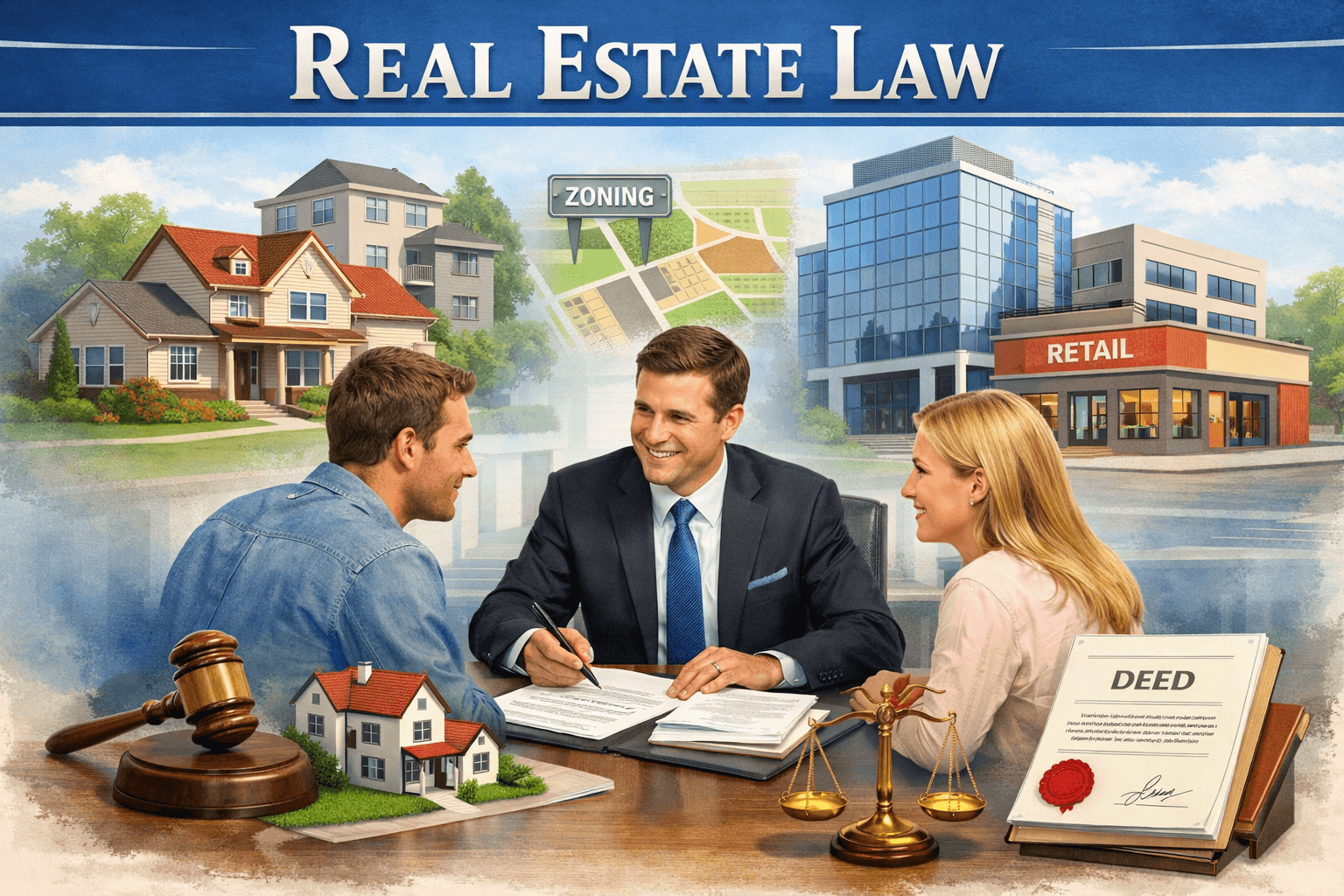
What is Real Estate Law?
Real estate law is the legal framework governing property ownership, transfer, and use. It covers residential and commercial transactions, zoning, landlord-tenant relations, contracts, and compliance. Real estate attorneys help ensure that property transactions are legally sound and protect their clients’ interests.
Real estate law is a cornerstone of the property industry, providing the legal framework that guides ownership, transactions, and compliance. For professionals in the USA, understanding this law is essential to navigating property deals, managing investments, and avoiding legal disputes.
Whether you are dealing with commercial real estate or residential property, knowing your rights and obligations can save time, money, and potential conflicts. In this guide, you will learn the key aspects of real estate law, the role of attorneys and law firms, and practical steps to ensure compliance across your property dealings. For more in-depth resources, visit zameeninfo.com.
Understanding Real Estate Law
Real estate law, also called property law, covers all legal aspects of owning, buying, selling, leasing, and managing property. It regulates both residential and commercial properties, ensures compliance with zoning and land use rules, and provides legal recourse in disputes.
Key Areas of Real Estate Law
- Property Ownership Rights: Determines who owns the property and the extent of rights associated with it.
- Residential Property Law: Covers buying, selling, leasing, and disputes in homes, condos, and apartments.
- Commercial Real Estate Law: Governs businesses, office spaces, warehouses, and retail properties.
- Zoning and Land Use: Ensures property is used in compliance with local and federal regulations.
- Contracts and Transactions: Includes purchase agreements, leases, and financing documents.
- Real Estate Compliance: Ensures adherence to laws, environmental regulations, and industry standards.
For more professional insights, you can explore our detailed guides at zameeninfo.com.
Role of a Real Estate Attorney
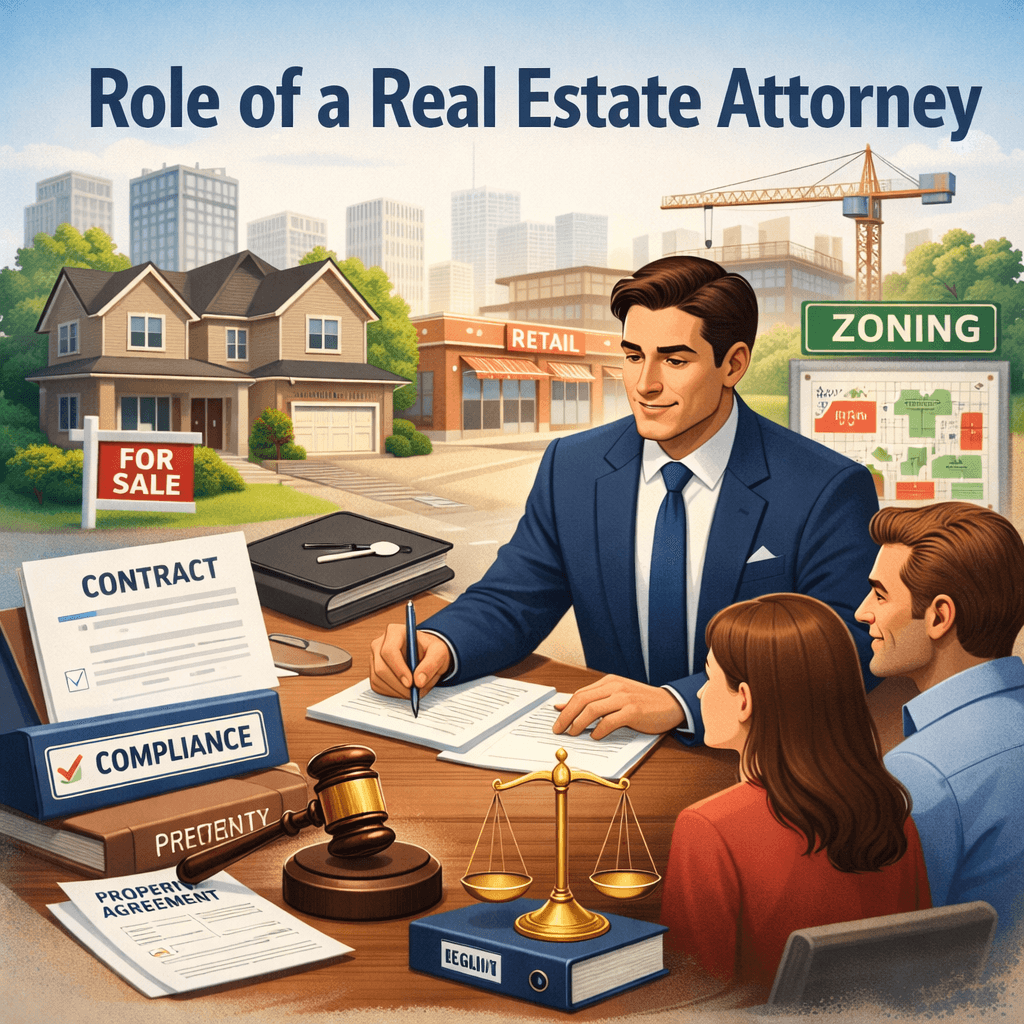
A real estate attorney specializes in property law and helps clients navigate transactions, draft contracts, resolve disputes, and maintain compliance. They are crucial for complex deals, commercial transactions, and high-value residential properties.
Responsibilities Include:
- Reviewing and drafting property contracts.
- Advising on the legal implications of transactions.
- Representing clients in disputes or litigation.
- Ensuring compliance with state and federal laws, including real estate laws in NY and other regions.
Learn more about selecting the right attorney on zameeninfo.com.
Choosing a Real Estate Law Firm
Selecting the right law firm is essential for smooth property transactions. Look for firms experienced in both residential and commercial law, with a proven track record of handling compliance and dispute resolution.
Tips for Choosing a Firm:
- Check the firm’s expertise in commercial real estate law or residential property law.
- Review past case studies or client testimonials.
- Ensure availability for consultation during key transaction phases.
- Confirm understanding of local regulations, especially if operating in multiple states.
Residential vs Commercial Real Estate Law
Residential property law focuses on homes, apartments, and condos, while commercial real estate law deals with offices, retail, and industrial properties. Both require adherence to contracts, zoning, and compliance rules.
Residential Property Law Highlights:
- Purchase and sale agreements
- Lease agreements and tenant rights
- Homeowner association rules
- Disclosure requirements
Commercial Real Estate Law Highlights:
- Commercial leases and subleases
- Business zoning regulations
- Environmental compliance
- Financing and investment contracts
Real Estate Compliance in the USA
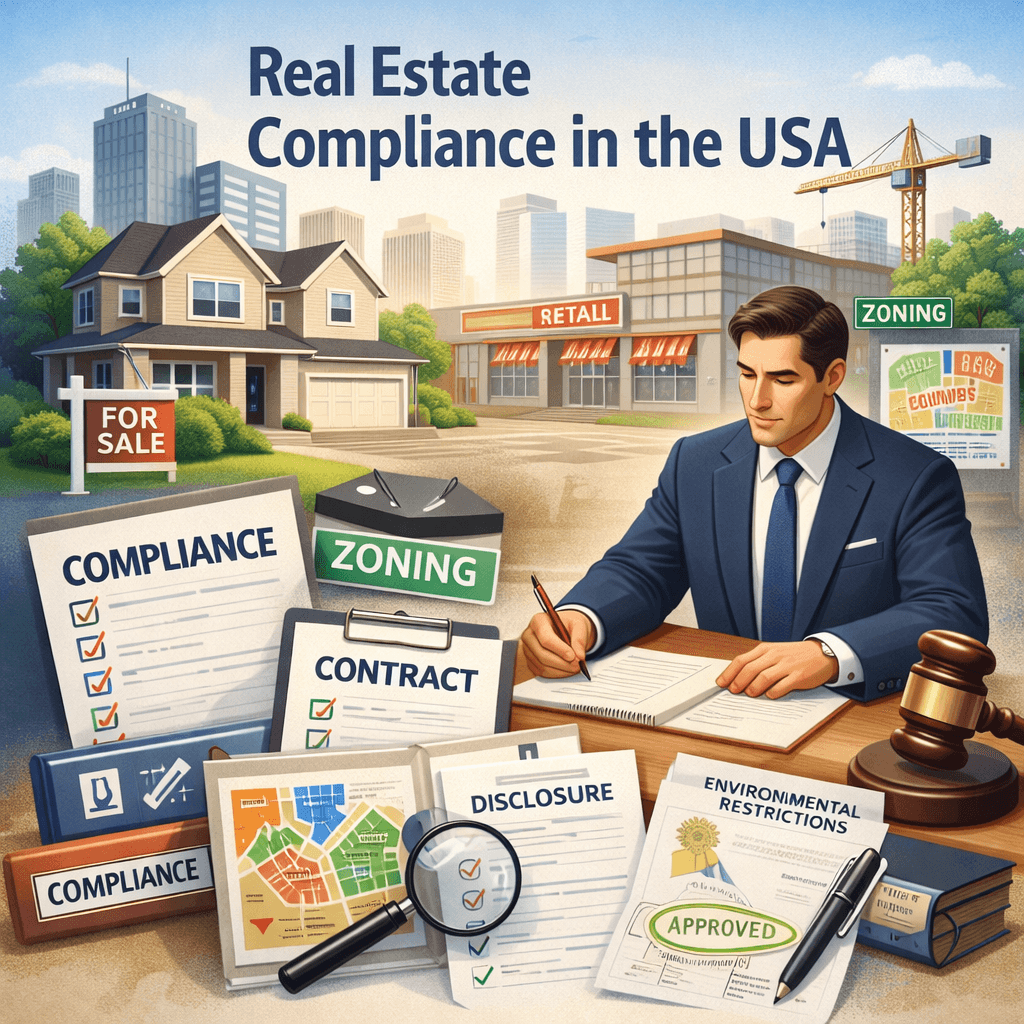
Compliance ensures property owners and developers follow federal, state, and local laws. Non-compliance can lead to fines, legal disputes, and financial loss.
Key Compliance Areas:
- Local zoning regulations
- Building and safety codes
- Environmental restrictions
- Disclosure laws for buyers and tenants
Pro Tip: Always consult a real estate attorney or a real estate law firm to ensure full compliance and reduce legal risk. Visit zameeninfo.com for more compliance resources.
Common Real Estate Law Mistakes to Avoid
Professionals often make errors that can result in legal disputes. Knowing these common mistakes helps in preventing costly problems.
- Skipping legal review of contracts
- Ignoring zoning and compliance regulations
- Misunderstanding property ownership rights
- Failing to disclose known property issues
- Overlooking local real estate laws, such as those in NY
FAQs About Real Estate Law
Q1: What does a real estate attorney do?
A real estate attorney manages property transactions, drafts contracts, resolves disputes, and ensures compliance with local and federal laws.
Q2: Do I need a real estate attorney for residential property?
While not always mandatory, hiring an attorney can protect you from legal issues, ensure contract accuracy, and handle disputes efficiently.
Q3: What is the difference between commercial and residential real estate law?
Residential law deals with homes and apartments, while commercial law governs business properties, including zoning, leases, and compliance.
Q4: How can I ensure compliance in real estate transactions?
Work with a licensed real estate attorney or law firm, check local zoning and environmental regulations, and carefully review all contracts.
Q5: Are there specific real estate laws in NY I should know?
Yes, New York has state-specific regulations, including tenant rights, disclosure obligations, and property tax rules that differ from those of other states.
Conclusion
Understanding real estate law is essential for professionals navigating the complex property landscape in the USA. From residential homes to commercial investments, knowledge of contracts, compliance, zoning, and property rights ensures smooth transactions and protects against costly legal disputes. Partnering with an experienced real estate attorney or a trusted real estate law firm is key to staying compliant and making informed decisions.