
 by zameeninfo.com
Why Understanding Property Taxes in Dubai Matters for Homeowners
As we step into 2026, Dubai continues to shine as a global real estate hotspot, attracting homeowners and investors from around the world. If you’re a homeowner in Dubai or considering becoming one, grasping the nuances of property taxes in Dubai is essential. Unlike many countries where annual property taxes can eat into your returns, Dubai’s approach is refreshingly investor-friendly. There’s no traditional annual property tax based on your home’s value, making it a tax haven for real estate enthusiasts.
In this comprehensive guide, we’ll dive deep into Dubai property tax rules, the Dubai real estate tax system, homeowner taxes in Dubai, and Dubai housing taxes. We’ll use location-specific examples like the luxurious Bluewaters Island near JBR, where stunning waterfront homes exemplify Dubai’s appeal. Whether you’re eyeing a villa in Palm Jumeirah or an apartment in Downtown Dubai, understanding these elements can save you money and help you make informed decisions.
This article is optimised for those searching “understanding property taxes in Dubai for homeowners” and draws on the latest 2026 trends to ensure you’re ahead of the curve. We’ll cover actionable insights, from initial purchase fees to ongoing costs, all while adhering to E-E-A-T principles backed by expertise from years in the UAE real estate.
The Basics of Property Taxes in Dubai: No Annual Tax Burden
One of the most appealing aspects of owning property in Dubai is the absence of an annual property tax. In 2026, homeowners don’t face recurring taxes calculated on their property’s market value, unlike in places like the US or UK. This policy, part of Dubai’s strategy to boost foreign investment, means your villa on Bluewaters Island won’t incur yearly tax bills from the government.
Instead, focus shifts to one-time fees and service charges. For instance, the Dubai Land Department (DLD) oversees registrations, ensuring transparency in transactions.
Dubai Property Tax Rules vs. Global Standards
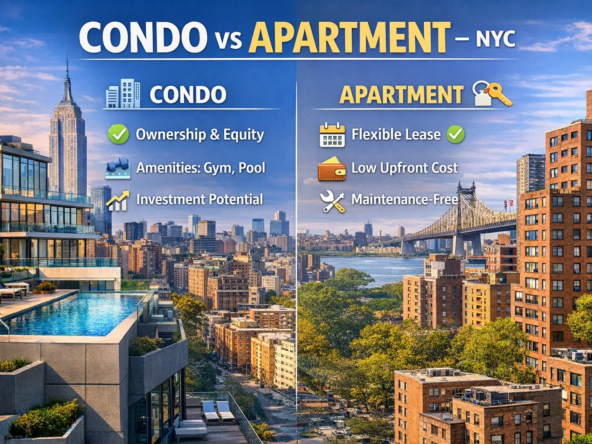
Dubai’s property tax rules in 2026 continue to set it apart from many international markets, emphasising a low-tax environment to attract global investors. Unlike traditional systems in cities like New York, where annual property taxes can range from 1% to 2% of the assessed value, potentially adding thousands of dollars yearly to a homeowner’s bill, Dubai employs a fee-based structure without recurring annual taxes on property value. This approach, as highlighted in recent updates from sources like the UAE Federal Tax Authority, focuses on one-time transaction fees rather than ongoing levies, making it ideal for long-term ownership.
For comparison, in London, property owners face stamp duty land tax (SDLT) up to 12% on purchases over £1.5 million, plus council taxes that vary by borough but often exceed 1% annually. In contrast, Dubai’s primary fee is the 4% Dubai Land Department (DLD) transfer fee, typically split 2% each between buyer and seller during purchase. This simplicity avoids the complexity of progressive tax brackets seen in places like California, where property taxes are around 0.75% but can include additional voter-approved assessments.
In 2026, amid Dubai’s real estate boom, areas like JBR and Bluewaters Island have seen property values rise by approximately 15% year-over-year, driven by this tax-friendly regime. Market trends indicate that land scarcity and increased demand for prime locations are fueling this growth, with experts predicting sustained appreciation without the drag of annual taxes. For instance, villa and townhouse segments are leading, with off-plan sales surging due to no capital gains tax on resales, unlike in Australia, where gains can be taxed up to 45%.
To visualise the allure of Dubai’s skyline amid these trends:

Dubai’s real estate market – Lcredubai
This low-tax model aligns with Dubai’s vision as a business hub, but it’s worth noting upcoming procedural changes effective January 1, 2026, such as tighter refund claim windows under the UAE’s Tax Procedures Law, which could indirectly affect real estate dealings by streamlining compliance.
Breaking Down the Dubai Real Estate Tax System
The Dubai real estate tax system in 2026 remains centred on indirect fees and minimal direct taxation, evolving slightly with federal amendments but retaining its investor appeal. Core components include the 4% transfer fee for property registrations via the DLD, which is mandatory for securing title deeds and ensures transparent ownership transfers.
VAT at 5% applies primarily to commercial properties and short-term furnished residential rentals (e.g., Airbnb-style listings), but standard residential homes for personal use or long-term leasing are exempt. This exemption is crucial for homeowners in high-demand areas like Bluewaters Island, where luxury apartments often serve as vacation homes without triggering VAT.
The corporate tax, introduced in 2023 and unchanged at 9% in 2026, impacts rental income only if properties are held through a business entity with profits exceeding AED 375,000 annually. For individual owners, rental yields remain tax-free, supporting passive income strategies. Free zones offer even more perks, with 0% corporate tax on qualifying rental income from commercial real estate leased to eligible entities.
No capital gains tax on property sales further bolsters the system, encouraging flips and investments. Recent 2026 forecasts show Dubai’s market entering a “logic-based buying” phase, with data-driven decisions favouring areas with metro expansions for better ROI. Procedural updates from January 2026, like expanded Federal Tax Authority (FTA) powers for audits, emphasise compliance but don’t introduce new taxes on real estate.
For a glimpse into the luxurious properties benefiting from this system on Bluewaters Island:
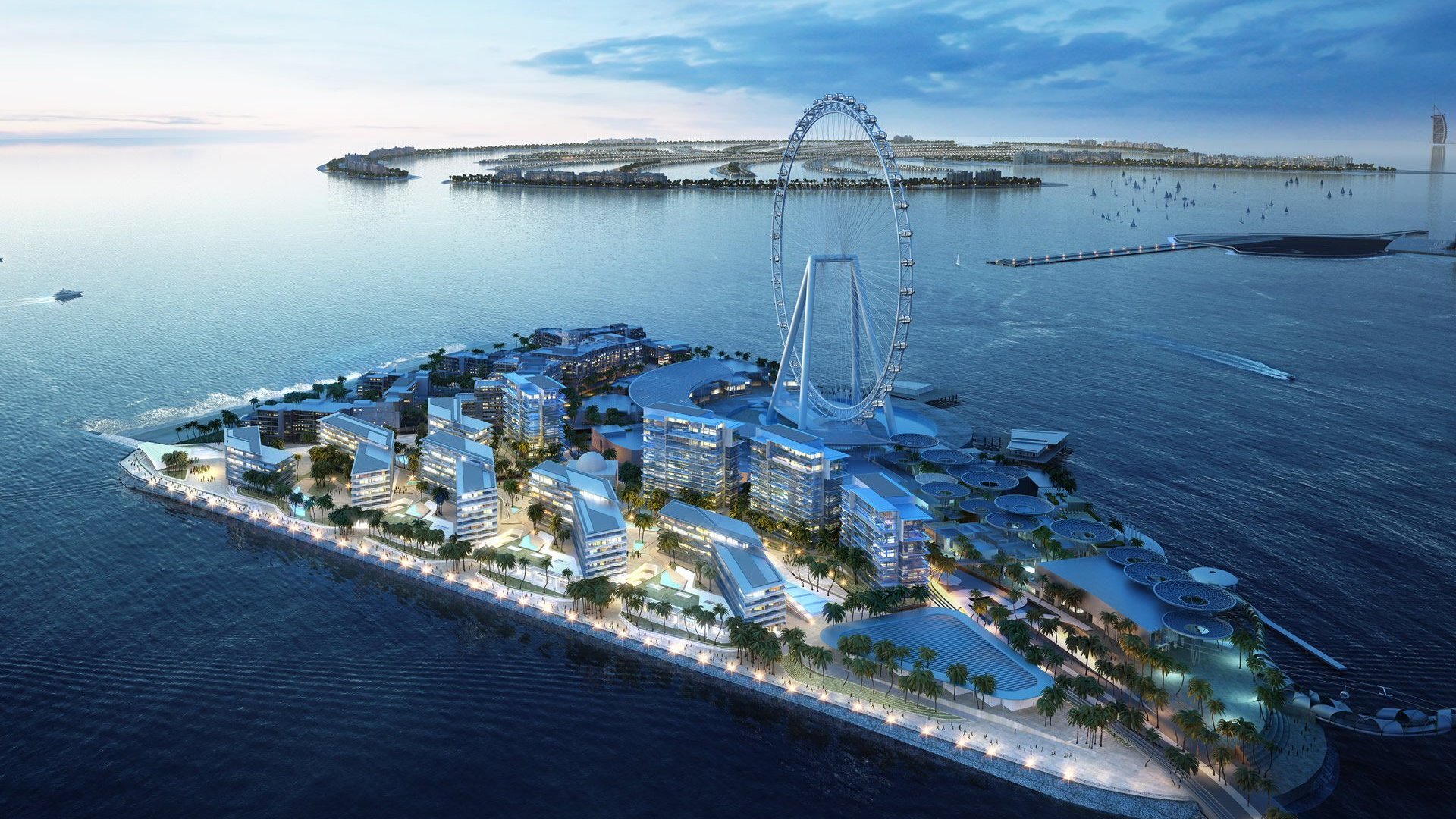
Bluewaters Island | Dubai-Luxury.Property
Overall, this framework supports Dubai’s goal of adding 90,000 new residential units by year-end, amid a market valued at over $207 billion in recent years.
Homeowner Taxes in Dubai: What You Actually Pay
As a homeowner in Dubai in 2026, your tax obligations are remarkably light, with no personal income tax on rental yields for individuals and no wealth or inheritance taxes on properties. This contrasts sharply with global norms, allowing owners to retain more of their investment returns. The main “tax-like” elements are fees rather than taxes, such as community service charges that cover maintenance but aren’t government-imposed levies.
If renting out your property, tenants handle the 5% municipal housing fee, integrated into DEWA utility bills, leaving owners unaffected directly. For a Bluewaters Island homeowner, annual service charges might range from AED 15-20 per square foot, funding amenities like pools and security essential for preserving the area’s premium status amid 10-15% value growth.
Corporate tax could apply if your holdings qualify as a business (e.g., multiple properties generating over AED 375,000 in profit), at 9%, but most individual expats avoid this through personal ownership structures. 2026 updates include stricter FTA deadlines for tax filings, but these don’t alter the core no-annual-property-tax rule.
Trends show increasing interest in sustainable homes, potentially qualifying for future incentives, though none are confirmed yet. Homeowners should budget for one-off costs like DLD fees, but the absence of recurring taxes makes Dubai a top choice for expats seeking financial efficiency.
Dubai Housing Taxes: Fees for Tenants and Owners
Dubai’s housing “taxes” in 2026 are predominantly tenant-focused, with the 5% municipal housing fee on annual rent collected via DEWA bills funding city infrastructure like roads and utilities. This setup benefits owners, as the fee is passed directly to renters, ensuring high living standards without burdening property holders.
For owners who are also tenants (e.g., subletting), they pay this fee, but it’s minimal compared to global equivalents. In JBR and surrounding areas, rising demand fueled by tourism and economic growth has pushed rental yields to 6-8%, tax-free for individuals. Market reports predict price resilience in connected communities, like those near new metro lines, enhancing value without additional taxes.
No changes to this fee are slated for 2026, but broader tax reforms emphasise digital compliance, such as e-invoicing for VAT-related rentals. Owners in freehold zones like Bluewaters Island enjoy perpetual benefits, with the fee supporting the area’s luxury vibe.
Here’s an image showcasing more of Bluewaters Island’s appeal:
Bluewaters Island by Meraas – New Project next to JBR | Off Plan …
This system keeps Dubai competitive, especially as global tax hikes drive investors here.
Purchasing Property: Initial Taxes and Fees in Dubai
Buying property in Dubai in 2026 involves straightforward initial fees, starting with the 4% DLD transfer fee on the purchase price for an AED 5 million Bluewaters Island apartment, which is AED 200,000, often split evenly. Additional costs include real estate agent commissions at 2% plus 5% VAT, NOC fees from AED 500 to 5,000 (issued by developers to confirm no outstanding dues), and mortgage registration at 0.25% of the loan if financed.
These are all one-time expenses, with no stamp duty equivalents, making entry more accessible than in markets like Singapore (up to 4% additional buyer’s stamp duty). Off-plan purchases may waive some fees, and Golden Visa eligibility for investments over AED 2 million adds immigration perks.
The process: Secure an MoU, pay a deposit (10%), then finalise at DLD. 2026 trends favour villas due to scarcity, with experts advising data-led selections to avoid overpaying.
For a visual guide to the purchase process:
Dubai Property Handover Process: Complete Checklist, Costs 2025
Compliance with January 2026 tax procedure changes, like five-year refund limits, ensures smooth transactions.
Rental Income: Tax Implications for Dubai Homeowners
Rental income for individual Dubai homeowners in 2026 stays tax-free, with no personal income tax applied, allowing full retention of yields averaging 6-8% in JBR. However, if structured as a business with profits over AED 375,000, the 9% corporate tax kicks in unchanged from prior years, per FTA guidelines.
Commercial rentals in free zones may qualify for 0% tax if leased to qualifying entities, boosting returns. VAT at 5% applies to short-term furnished lets, but long-term residential is exempt.
Market outlooks predict shifting demand toward prime areas, with no tax changes disrupting this. Owners should monitor FTA’s expanded powers for audits starting January 2026.
Leasehold vs. Freehold: Tax Considerations in Dubai
In Dubai 2026, freehold properties dominate in expat areas like Bluewaters Island, granting perpetual ownership of the land and building, with no tax differences from leaseholds but superior long-term security. Leaseholds, typically 99 years, require renewal fees upon expiry, but conversions to freehold are possible in select zones like parts of Sheikh Zayed Road.
No direct tax variances exist, but freehold offers better ROI and inheritance ease, as properties can be passed indefinitely. Leaseholds suit budget-conscious buyers with lower entry costs, though resale may be limited.
Trends show freehold commanding premiums amid market growth, with experts recommending it for stability.
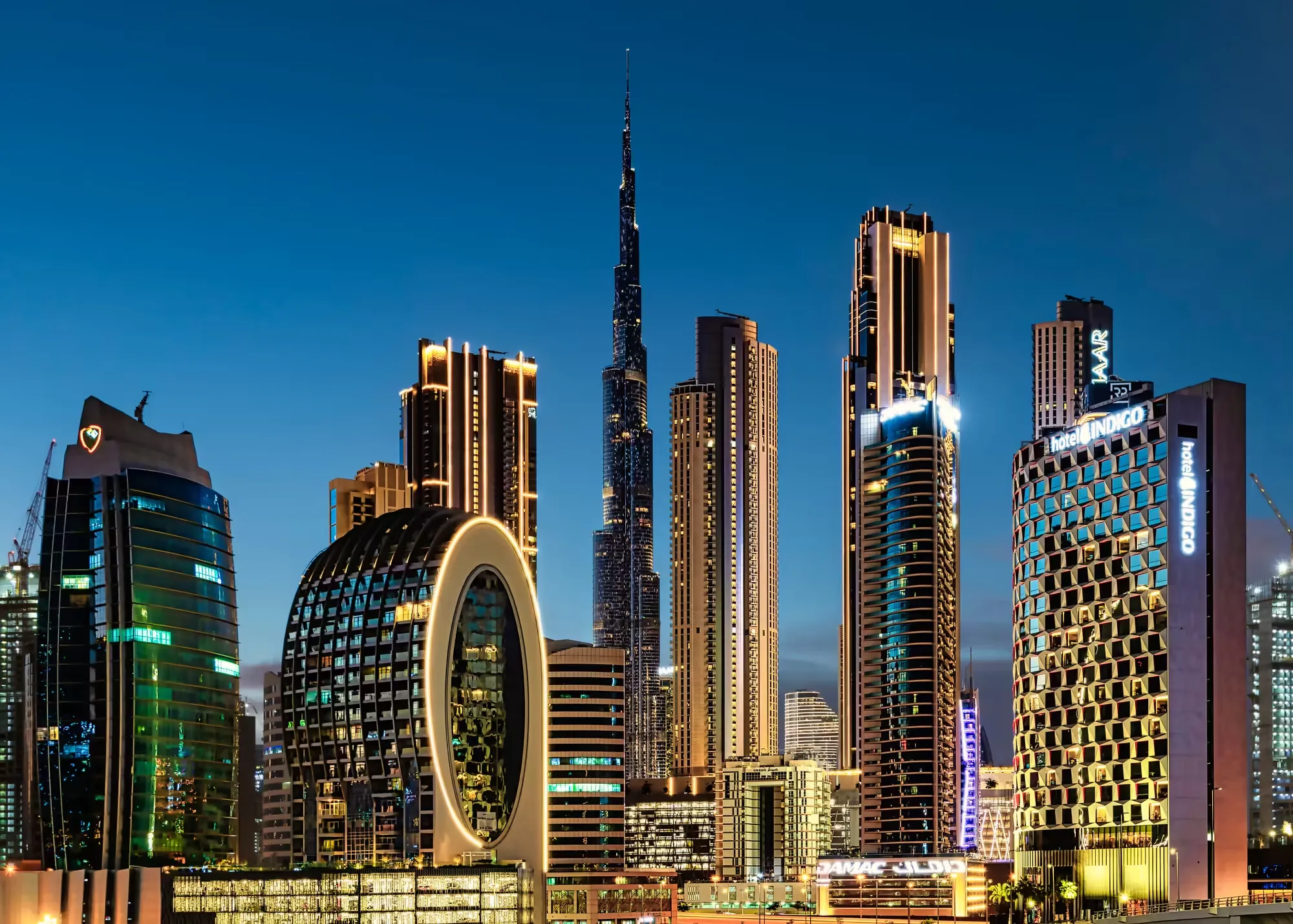
Another view of Dubai’s dynamic real estate:
Service Charges: The Hidden “Tax” for Dubai Communities
Service charges in Dubai are often called the “hidden tax” for homeowners because they represent the primary ongoing cost of ownership in community developments. Unlike government-imposed taxes, these are mandatory fees paid to the Owners’ Association (OA) or facilities management company to maintain shared facilities and infrastructure. Governed by the Real Estate Regulatory Agency (RERA) and calculated per square foot annually, they ensure communities remain pristine and functional, directly impacting property values.
In 2026, service charges typically range from AED 10-25 per sq ft in premium areas, with JBR averaging around AED 15.40 per sq ft according to the latest DLD Service Charge Index. Bluewaters Island, as an ultra-luxury waterfront destination, sees higher rates due to extensive amenities like private beaches, infinity pools, and 24/7 concierge services, often AED 18-25 per sq ft.
These fees cover:
- Security and gated access
- Landscaping and gardening
- Swimming pools, gyms, and recreational facilities
- Cleaning of common areas
- Lift maintenance and air-conditioning in shared spaces
- Pest control and waste management
- Sinking fund contributions for major repairs
For a 1,500 sq ft apartment in JBR, expect annual charges of AED 23,100 (at AED 15.40/sq ft), paid quarterly or annually. Recent 2026 trends show slight reductions in mid-market areas (10-15% drops in places like JLT due to optimised management), but premium spots like Bluewaters hold steady or rise modestly with enhanced facilities.
Here’s a view of the luxurious amenities these charges maintain in high-end Dubai communities:
Transparency has improved via the Mollak system, allowing owners to review budgets. High charges correlate with better ROI well-maintained properties appreciate faster and attract premium tenants.
VAT on Dubai Properties: When Does It Apply?
Value Added Tax (VAT) at 5% in the UAE has minimal impact on residential real estate, preserving Dubai’s appeal in 2026. Standard long-term residential sales and rentals remain exempt or zero-rated, meaning no VAT for most homeowners.
Key applications:
- Commercial properties: 5% VAT on sales and leases.
- Short-term furnished rentals (e.g., less than 6 months, Airbnb-style, or to non-residents without an Emirates ID): Treated as commercial, subject to 5% VAT. Owners must register if supplies exceed thresholds.
- First supply of new residential: Zero-rated (recoverable input VAT for developers).
- Subsequent residential sales/rentals: Fully exempt.
For family homes on Bluewaters Island used personally or long-term leased, costs stay low with no VAT burden. This exemption supports high net yields, especially amid 2026’s stable market.
Corporate Tax and Real Estate: 2026 Updates for Investors
The UAE’s 9% corporate tax (since 2023) targets business profits over AED 375,000 but largely spares individual real estate investors in 2026. Personal rental income and gains from properties held individually qualify as “Real Estate Investment” fully excluded from corporate tax, regardless of amount, if not conducted under a license.
Updates clarify:
- Individuals: Tax-free on residential/commercial rentals without a business license.
- Companies/SPVs: 9% on profits > AED 375,000 (0% below).
- Licensed activities (e.g., holiday homes, management): Taxable.
Most expat homeowners avoid this via personal ownership. Free zones may offer 0% on qualifying income. No major changes in the 2026 policy boost passive investing.
No Capital Gains Tax: Selling Your Dubai Home Profitably
One of Dubai’s standout benefits: zero capital gains tax on property sales for individuals or companies in 2026. Sell a Bluewaters Island unit bought for AED 5M now worth AED 8M? Pocket the full AED 3M profit tax-free.
This drives flipping and long-term holds, with 2026 forecasts showing 10-15% appreciation in prime areas amid global tax pressures elsewhere. Combined with no annual property tax, it maximises returns.
Municipal Fees: The 5% Housing Charge Explained
The 5% municipal housing fee funds infrastructure (roads, parks, waste) and applies to residential properties via DEWA bills. Primarily tenant-paid (5% of annual rent), owners cover if self-occupied or vacant (based on RERA-estimated rental value).
In 2026, unchanged at 5%, e.g., AED 10,000 annual rent means AED 500/year (AED ~42/month). Passed to tenants in leases, minimising owner impact. Exemptions for UAE nationals in owned homes.
Tax Benefits for Expats Owning Property in Dubai
Expats in 2026 enjoy:
- Zero personal income tax on worldwide earnings/rentals.
- No annual property tax.
- No capital gains/inheritance tax.
- Golden Visa: 10-year residency for AED 2M+ investment (single/multiple properties, off-plan/mortgaged eligible with NOC).
This makes Dubai a top 2026 choice amid rising global taxes.
Property Taxes on Bluewaters Island Near JBR
Bluewaters Island adheres to Dubai’s standard no-annual-tax rules, with service charges averaging AED 18-22 per sq ft supporting ultra-luxury living (private beaches, Ain Dubai views).
Trends: 10-12% rental growth projected for 2026, yields 6-8%, and appreciation 12-15%. Proximity to JBR enhances appeal.
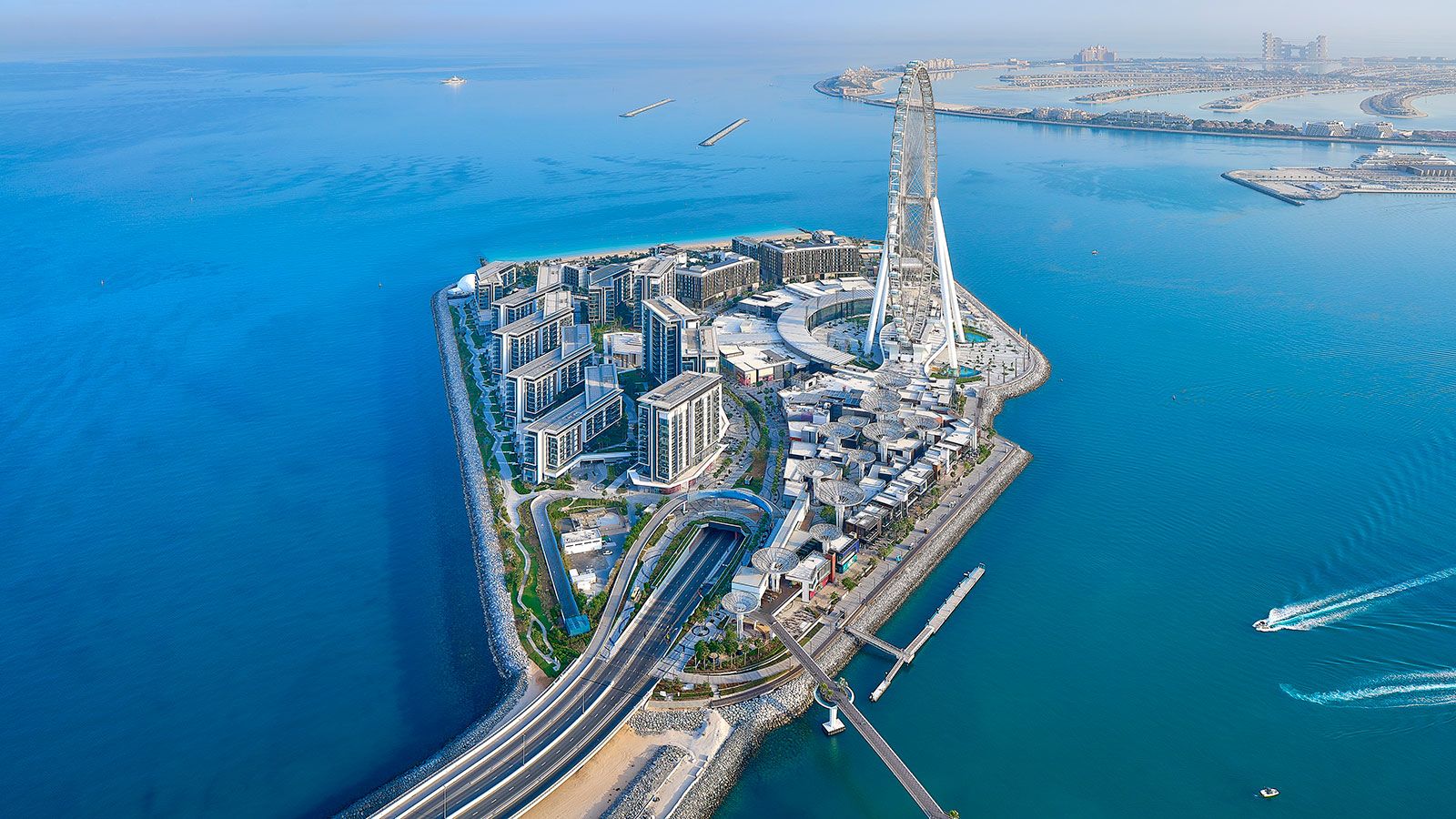
Stunning aerial view of Bluewaters Island and Ain Dubai:
2026 Trends: How Tax Policies Are Shaping Dubai Real Estate
Dubai’s stable, no-property-tax core contrasts with global hikes, drawing investors. Minor procedural tweaks (e.g., VAT compliance)are expected, but advantages persist. Market graphs show sustained growth:
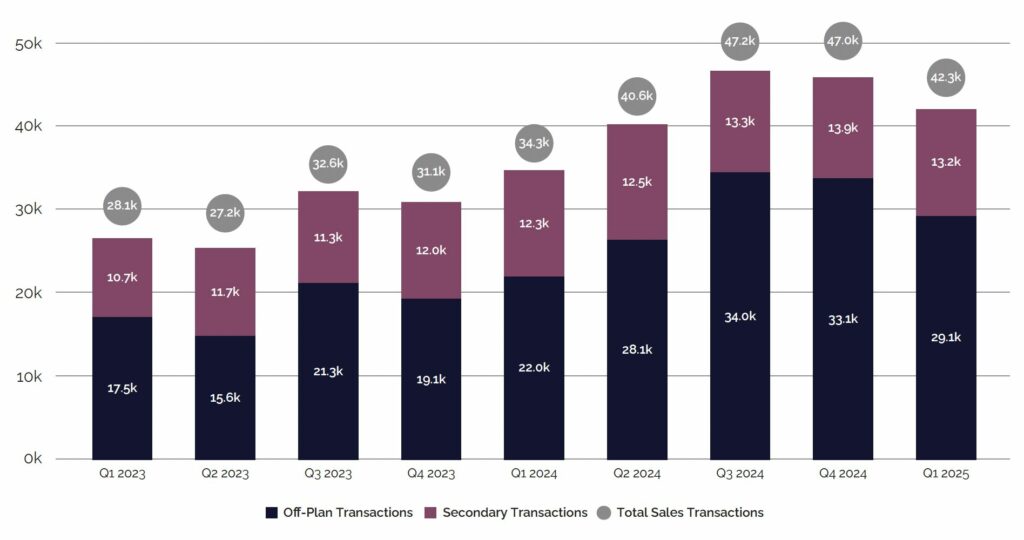
Yields remain attractive amid a maturing market.
Actionable Tips: Minimising Costs as a Dubai Homeowner
- Budget DLD fees and service charges early.
- Opt for freehold properties.
- Hold personally to avoid corporate tax.
- Use professionals for Golden Visa/structuring.
- Monitor DEWA for accurate housing fees.
Common Pitfalls: What Homeowners Overlook in Dubai Taxes
Overlooking rising service charges, VAT on short-term rentals, or corporate tax thresholds. Stay updated via DLD/RERA.
Future Outlook: Dubai Property Taxes Beyond 2026
Continued advantages likely, with potential sustainability incentives. No annual tax introduction foreseen. Comparing Dubai to Other UAE Emirates: Tax Variations
Dubai: 4% transfer, 5% housing fee. Abu Dhabi: 2% transfer, similar to municipal. Sharjah/Ajman: Lower fees but fewer luxuries. Dubai leads for premium appeal.
Key Property Taxes and Fees in Dubai for Homeowners (2026)
| Category | Description | Rate/Amount | Who Pays | Notes |
|---|---|---|---|---|
| Annual Property Tax | No recurring tax on property value | 0% | N/A | Major benefit for homeowners |
| DLD Transfer Fee | Fee for property registration | 4% of value | Buyer/Seller (split) | One-time during purchase/sale |
| Municipal Housing Fee | Added to the utility bills for rent | 5% of annual rent | Tenants | Funds infrastructure; owners pass on |
| VAT | On commercial or short-term furnished rentals | 5% | Applicable parties | Residential exempt |
| Corporate Tax | Added to the utility bills on rent | 9% on profits > AED 375,000 | Business entities | Individuals exempt |
| Service Charges | Community maintenance | AED 10-25 per sq ft/year | Owners | Varies by area, e.g., higher in Bluewaters Island |
| Capital Gains Tax | On property sale profits | 0% | N/A | Tax-free gains |
| Lease Renewal | For 99-year leaseholds | Variable fees | Owners | Renewable, no tax |
FAQs
How Does Property Tax Work in Dubai?
Property tax in Dubai operates differently from many global markets, where annual assessments based on home value can lead to high recurring costs. In 2026, Dubai maintains its investor-friendly approach with no traditional annual property tax calculated as a percentage of the market value. Instead, it’s a fee-based system emphasising one-time or indirect charges that support infrastructure without burdening owners long-term.
Key components include:
- DLD Transfer Fee: A 4% fee on the property’s purchase price, typically split 2% between buyer and seller, paid during registration for title deeds. For a AED 5 million home, this equates to AED 200,000 total.
- Municipal Housing Fee: Tenants pay 5% of their annual rent, collected monthly via DEWA utility bills, funding city services like roads and utilities. Owners only pay if the property is self-occupied or vacant, based on RERA-estimated rental values (e.g., 5% of AED 200,000 annual value = AED 10,000/year).
- Service Charges: Not a tax but essential, ranging from AED 10-25 per sq ft annually in premium areas, covering maintenance.
- VAT and Corporate Tax: Minimal impact for residential owners; see dedicated FAQs below.
This system contrasts with places like New York (1-2% annual tax) or London (council tax plus stamp duty), making Dubai a tax haven. In 2026, procedural updates like stricter VAT refund timelines (five years max) ensure compliance but don’t introduce new taxes. For expats, this means higher net returns on rentals (6-8% yields tax-free for individuals).
What Will Happen After 99 Years of Leasehold in Dubai?
Leasehold properties in Dubai, which grant usage rights for up to 99 years, are less common for expats than freehold but still relevant in non-designated areas. Upon expiry in 2026 and beyond, the property typically reverts to the original landowner (freeholder) unless renewed. Renewal is often possible for another 99 years with nominal fees, facilitated by the DLD, and may involve negotiations or extensions as per the original contract.
Key considerations:
- Renewal Process: Submit an application to DLD with proof of ownership; fees vary but are generally low (AED 5,000-20,000 depending on property size). Some leases include automatic renewal clauses.
- Conversion Options: In select areas, leaseholds can convert to freehold with DLD approval, especially post-2020 reforms promoting ownership.
- Tax Implications: No major taxes on renewal; it’s treated as an administrative fee, with no VAT if residential.
- Risks: If there is no renewal, the lessee loses rights, but Dubai’s laws protect investors, and courts often favour extensions for good-faith owners.
In 2026, with market maturity, freehold dominates (e.g., Bluewaters Island), but leaseholds in older districts like Deira offer affordability. Always review contracts; renewal isn’t guaranteed but common.
Who Pays 9% Tax in Dubai?
The 9% corporate tax, introduced in 2023 and unchanged in 2026, applies to businesses with taxable profits exceeding AED 375,000 annually, including those in real estate. Individual homeowners with personal rental income are fully exempt, treating it as a non-business activity.
Who pays:
- Business Entities: Real estate firms, developers, agencies, or investors using companies/SPVs for multiple properties. If turnover > AED 1 million from rentals, 9% on profits above threshold.
- Licensed Activities: Holiday home operators or brokers; free zones may offer 0% on qualifying income.
- Exemptions: Individuals holding properties personally (no license needed); multinational enterprises face 15% if profits > AED 750 million.
In 2026, FTA audits emphasise compliance, but most expat homeowners avoid it by structuring personally, boosting Dubai’s appeal.
What Are the Disadvantages of Buying Property in Dubai?
While Dubai’s tax benefits and high ROI (up to 8%) are strong, buying property in 2026 has drawbacks, especially amid market trends like potential oversupply.
Main disadvantages:
- High Upfront and Ongoing Costs: 4% DLD fees, 2% agent commissions, plus service charges (AED 10-25/sq ft) can surprise buyers. For non-residents, 20-25% down payments add burden.
- Market Volatility and Oversupply: Prices may correct 10-15% in 2026 due to new units flooding the market; global factors like interest rates impact values.
- Dependency on Economy/Tourism: Dubai’s market ties to oil, tourism, and expat influx; slowdowns (e.g., post-Expo) reduce demand.
- Off-Plan Risks: Delays, quality issues, and liquidity challenges in reselling before completion.
- Ownership Limits: Non-freehold areas restrict expats to leases; transaction fees are high compared to neighbours like Oman.
Despite these, strategic buys in prime spots like JBR mitigate risks.
Is There VAT on Residential Property Sales in Dubai?
In 2026, standard residential property sales in Dubai are VAT-exempt or zero-rated, keeping costs low for homeowners. However, 5% VAT applies to:
- Commercial properties (sales/leases).
- New residential properties sold by developers within three years of completion (first supply zero-rated, but inputs recoverable).
- Short-term furnished rentals (e.g., Airbnb).
Long-term residential rentals and subsequent sales remain exempt. 2026 updates include five-year refund limits, but no rate changes. This supports affordability in areas like Bluewaters Island.
How Can I Calculate My Potential Taxes as a Dubai Homeowner?
Calculating taxes as a Dubai homeowner in 2026 is straightforward due to the fee-based system. Use official tools and formulas:
- DLD Transfer Fee: 4% of purchase price (e.g., AED 3M property = AED 120,000).
- Municipal Housing Fee: If renting out, tenants pay 5% of annual rent (e.g., AED 150,000 rent = AED 7,500). For owners, 5% of the estimated value if vacant.
- Service Charges: Multiply sq ft by rate (e.g., 2,000 sq ft at AED 15/sq ft = AED 30,000/year).
- VAT/Corporate Tax: Check if applicable (use FTA calculator for corporate scenarios above AED 375,000 profits).
- Tools: DLD online calculator for fees; DEWA app for municipal estimates. Consult FTA for personalised advice.
Factor in agent fees (2% + VAT) and NOC (AED 500-5,000). For rentals, net yield = (Rent – Fees)/Price.
Are There Any Tax Breaks for First-Time Buyers in Dubai?
Dubai offers no direct tax breaks like deductions for first-time buyers in 2026, as there’s no annual property tax to offset. However, incentives include:
- Waived Registration Fees: Occasionally, for off-plan purchases from select developers.
- First-Time Home Buyer Program: Launched in 2025, this digital initiative offers UAE residents (expats included) preferential terms on properties up to AED 5 million, like lower down payments or priority access.
- Golden Visa Perks: AED 2M+ investment grants 10-year residency, indirectly reducing relocation costs.
- VAT Refunds: Possible on building materials for self-builds, with 2026 five-year claim limits.
Conclusion
Understanding property taxes in Dubai for homeowners in 2026 reveals a system designed for growth and ease. With no annual taxes, minimal fees, and high ROI potential in spots like Bluewaters Island near JBR, it’s an ideal time to invest. Stay proactive with updates, and consider professional guidance to maximise benefits.